Fatty Alcohol Ethoxylate
Quality Fatty alcohol ethoxylates from Polykem are nonionic surfactants built by reacting a fatty alcohol with ethylene oxide. The reaction yields a molecule with a hydrophilic polyoxyethylene chain attached to a lipophilic alkyl tail, and the length of that EO chain is what determines where the product performs best. Polykem supports customers with grade selection, samples, COA/TDS/SDS documentation and export delivery.
Polykem manufactures and supplies this surfactant family under the AEO designation. Different EO levels shift the balance between oil solubility and water dispersibility, so a formulator can move from a low-EO grade that leans oil-friendly to a high-EO grade that disperses readily in water — all within the same product family.
Product Parameters
CAS No.: 9002-92-0 (common reference); C12-14 alcohol ethoxylates may carry CAS 68439-50-9
Chemical Formula: RO(CH₂CH₂O)ₙH
|
Trade Name
|
Appearance (25°C)
|
Color Pt-Co (max)
|
OHV mg KOH/g
|
Water % (max)
|
pH (1% aq, 25°C)
|
|
AEO-1
|
Colorless liquid
|
20
|
233–239
|
0.1
|
6.0–7.0
|
|
AEO-2
|
Colorless liquid
|
20
|
191–310
|
0.1
|
6.0–7.0
|
|
AEO-3
|
Colorless liquid
|
20
|
166–180
|
0.1
|
6.0–7.0
|
|
AEO-4
|
Colorless or white liquid
|
20
|
149–159
|
0.5
|
6.0–7.0
|
|
AEO-5
|
Colorless or white liquid
|
20
|
129–144
|
0.5
|
6.0–7.0
|
|
AEO-7
|
Colorless or white liquid
|
20
|
108–116
|
0.5
|
6.0–7.0
|
|
AEO-9
|
White liquid or paste
|
20
|
92–99
|
0.5
|
6.0–7.0
|
Grade availability and specifications may vary by order requirements. Contact Polykem for current product data.
How EO Number Changes Performance
The ethylene oxide content is the primary design variable. As EO units increase, the molecule becomes more hydrophilic, water solubility rises, and the surfactant moves toward better detergency and emulsification in aqueous systems. Lower EO grades remain more oil-soluble and suit systems where water content is limited.
This progression shows up across the common grades. Low-EO products such as AEO-3 tend toward oil solubility and are often used where emulsification of oily phases matters. Mid-range grades like AEO-7 balance water solubility with cleaning performance and appear in textile and household formulations. Higher-EO grades such as AEO-9 disperse readily in water and are used in detergency-focused systems.
HLB value follows the same logic. Formulators can select a grade whose HLB matches the required emulsion type — oil-in-water or water-in-oil — without changing the base surfactant chemistry.
Product Features
Adjustable HLB Characteristics
Different EO levels deliver different hydrophilic-lipophilic balance values, allowing selection of a grade suited to cleaning, emulsification or wetting duties rather than compromising on a single fixed product.
Balanced Detergency and Wetting
Fatty alcohol ethoxylates provide good detergency and wetting performance, which supports use in industrial cleaning, textile auxiliaries and other formulation systems where surface activity is the core requirement.
Compatibility with Other Surfactants
As nonionic surfactants, AEO grades combine well with anionic and other nonionic surfactants. Formulators use this compatibility to tune foam, viscosity and cleaning performance without reformulating from scratch.
Flexible EO Grade Range
Multiple EO levels give buyers a way to match water solubility, emulsification strength and detergency to the specific application, rather than forcing one grade across different systems.
Biodegradability
Fatty alcohol ethoxylates are readily biodegradable under standard test conditions. Regulatory assessments have identified them as lower-risk alternatives to NPE in surfactant applications. This matters for formulators facing tightening environmental documentation requirements in the EU and other regulated markets.
Typical Applications
Industrial Cleaning
Detergents, metal cleaning and industrial cleaners use fatty alcohol ethoxylates for their wetting and detergency performance, particularly where oily soil removal is required.
Textile Auxiliaries
Textile processing uses these surfactants as wetting, emulsifying and cleaning components across pretreatment and dyeing stages.
Agricultural Formulations
Agricultural chemical formulations use AEO grades as emulsifying or dispersing components, helping active ingredients stay evenly distributed.
Oilfield Chemicals
Oilfield systems requiring emulsification and dispersion performance can use fatty alcohol ethoxylates as formulation components.
Personal Care
Personal care products use these surfactants for mild cleansing and emulsification, where nonionic character reduces irritation potential compared with some anionic alternatives.
Other Industrial Systems
Any formulation system requiring nonionic surfactant properties can evaluate fatty alcohol ethoxylates as a candidate.
Packaging Options
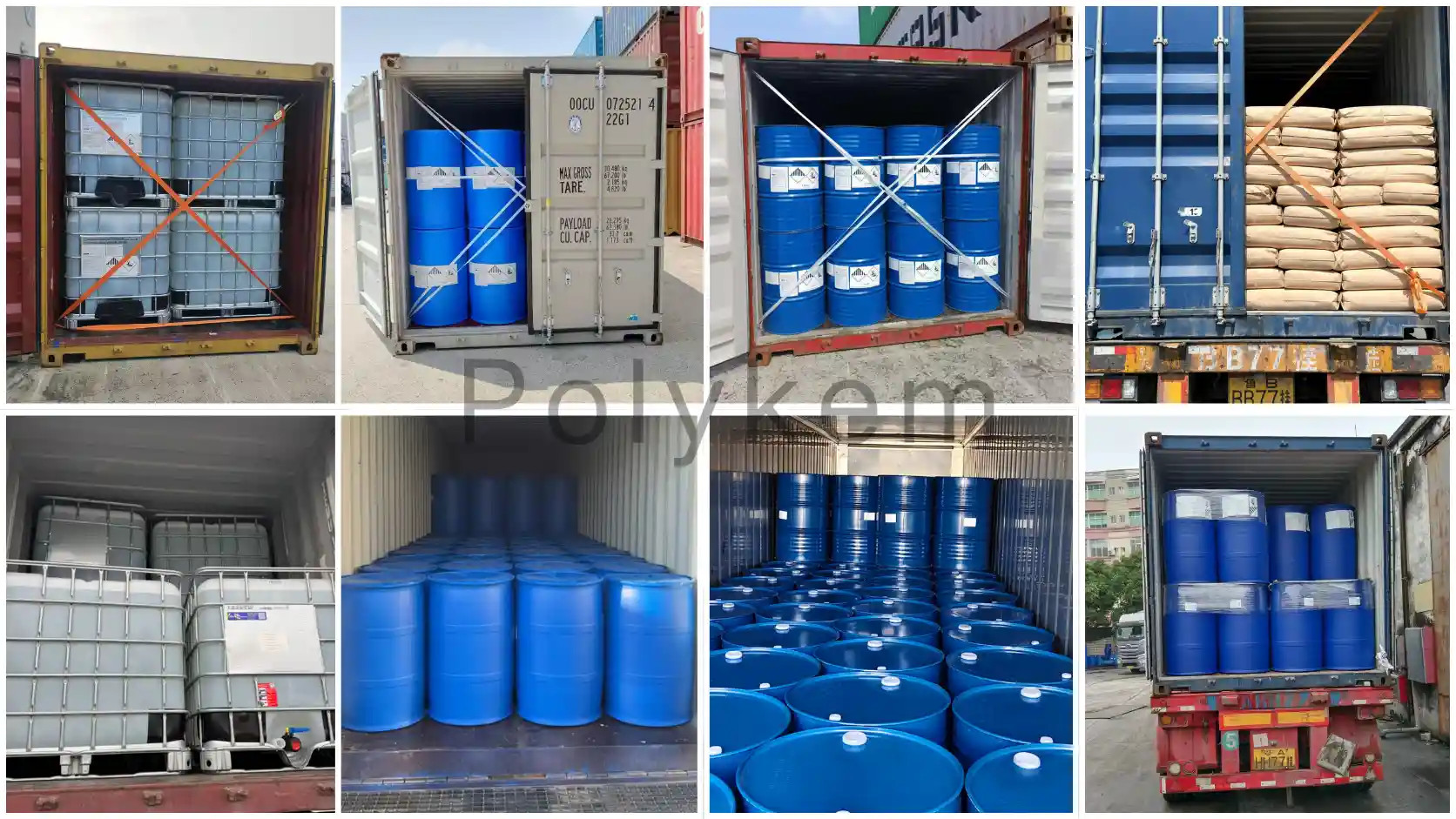
Fatty alcohol ethoxylates ship in packaging suited to different order volumes and transport conditions:
1. Drums: 180–200 kg per drum, depending on grade
2. IBC tanks: 900–1,000 kg per IBC
3. Bulk packaging: available for large-volume orders
Customized packaging and OEM labeling can be discussed according to order requirements.
Why Choose Polykem
Manufacturing and Grade Availability
Polykem manufactures a range of fatty alcohol ethoxylate grades, including AEO-3, AEO-7 and AEO-9, for different application needs. Our team supports grade selection based on application requirements, processing conditions and target performance.
Quality Control and Batch Consistency
A professional quality control team and in-house laboratory monitor key indicators such as appearance, color, hydroxyl value, moisture and pH. Production monitoring and pre-shipment checks help maintain stable performance for regular orders and bulk procurement.
Free Sample Support
Free samples are available for qualified projects, helping customers evaluate product performance before bulk purchasing. Sample arrangements are made according to application requirements and testing needs.
Technical Documentation
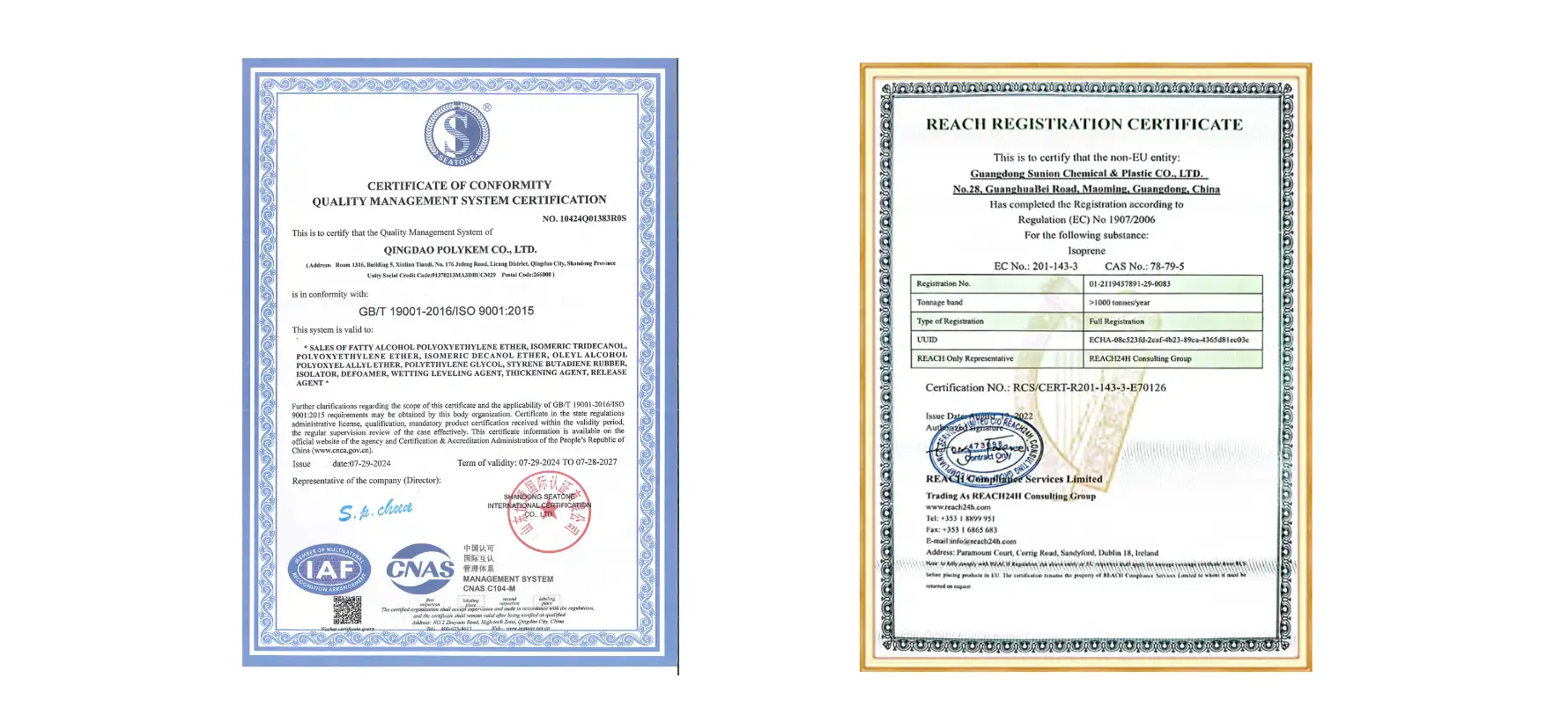
COA, TDS, SDS, ISO 9001 and REACH-related documents can be provided according to product requirements, supporting product evaluation, supplier qualification and import procedures.
Company Strength
1. 15+ years in the rubber and chemical industry
2. 110 raw materials supplied
3. Exports to 40+ countries
4. 700+ customers served across 100+ industries
5. Independent testing laboratory
6. ISO 9001, SGS certification and REACH registration
Fatty Alcohol Ethoxylate vs. Nonylphenol Ethoxylate (NPE)
|
Dimension
|
Fatty Alcohol Ethoxylate (AEO)
|
Nonylphenol Ethoxylate (NPE)
|
|
Regulatory status
|
Generally not restricted under REACH Annex XVII for surfactant use
|
Restricted in the EU; listed as substance of very high concern due to endocrine disruption concerns
|
|
Environmental profile
|
Readily biodegradable; lower environmental risk identified in regulatory assessments
|
Persistent degradation products; regulatory pressure across multiple regions
|
|
Performance
|
Tunable via EO number; effective wetting, emulsification and detergency
|
Comparable performance in many applications
|
|
Cost position
|
Generally higher raw material cost than NPE
|
Lower cost, but regulatory and reputational risk offset the savings
|
|
Supply availability
|
Broad global supply from multiple producers
|
Increasingly constrained in regulated markets
|
Fatty Alcohol Ethoxylate vs. Alkyl Polyglucoside (APG)
|
Dimension
|
Fatty Alcohol Ethoxylate (AEO)
|
Alkyl Polyglucoside (APG)
|
|
Feedstock origin
|
Fatty alcohol (petro- or oleo-based) + ethylene oxide
|
Sugar + fatty alcohol
|
|
Foaming
|
Tunable from low to high by adjusting EO number
|
Known for stable, rich foam
|
|
Skin compatibility
|
Good; nonionic character reduces irritation vs. anionic
|
Excellent; often preferred in mild personal care
|
|
Phase behavior
|
Distinct from APG due to EO chain interaction with water
|
Different phase behavior; can form liquid crystal phases above certain temperatures
|
|
Cost
|
Generally lower than APG
|
Higher
|
|
Best fit
|
Industrial cleaning, textiles, formulations where tunable foam and HLB matter
|
Personal care, mild cleansers, applications prioritizing foam richness and renewable feedstock
|
FAQ
What is the difference between fatty alcohol ethoxylate and lauryl alcohol ethoxylate?
Lauryl alcohol ethoxylate is one member of the fatty alcohol ethoxylate family, based on a C12 fatty alcohol. Fatty alcohol ethoxylates as a category can use different alcohol chain lengths and EO numbers, so the family covers a wider performance range than any single grade.
How do I choose the right EO grade for my formulation?
EO number determines the hydrophilic-lipophilic balance. Low-EO grades lean oil-soluble and suit emulsification of oily phases; higher-EO grades disperse in water and favor detergency in aqueous systems. Share your formulation type, target HLB and application conditions with Polykem, and we will suggest a starting grade.
Is it compatible with other surfactants?
Yes. As nonionic surfactants, AEO grades combine with anionic and other nonionic surfactants, allowing formulators to adjust foam, viscosity and cleaning performance.
Can Polykem provide samples and technical documents?
Yes. Samples are available for qualified projects, and COA, SDS, TDS, ISO 9001 and REACH-related documents can be provided according to customer requirements.
What packaging options are available?
Drums of 180–200 kg, IBC tanks of 900–1,000 kg, and bulk packaging for large-volume orders. Customized packaging and OEM labeling can be discussed according to order requirements.
What quality indicators does Polykem monitor?
Appearance, color, hydroxyl value, moisture and pH are monitored during production and before shipment to support batch consistency.
Does Polykem attend industry exhibitions?
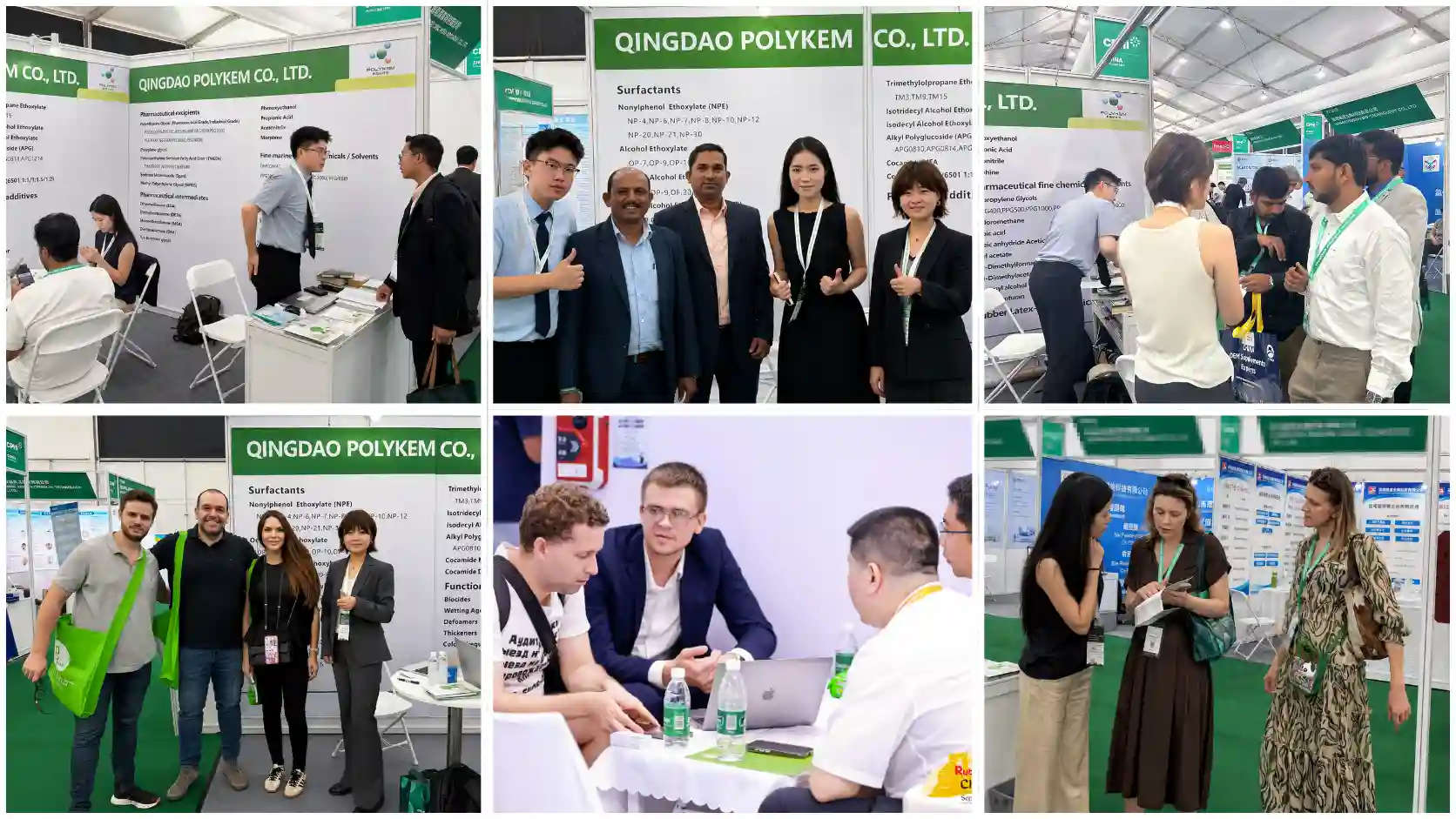
Yes. Polykem participates in major chemical industry exhibitions and professional events throughout the year. Exhibition updates and meeting arrangements are posted on the official website.
Is fatty alcohol ethoxylate biodegradable?
Yes. They are readily biodegradable under standard conditions. Regulatory assessments have identified them as lower-risk alternatives to nonylphenol ethoxylates in surfactant applications.
What is the shelf life and storage condition?
Store in a cool, dry, well-ventilated area away from direct sunlight and heat sources. Keep containers sealed when not in use. Under proper storage conditions, typical shelf life is 2 years from production date. Confirm specific storage requirements with Polykem for the selected grade.
Can the product replace nonylphenol ethoxylate directly?
In many emulsifier and dispersant applications, they are the most commonly used replacement class for NPE. However, HLB and EO number must be matched to the original NPE grade, and formulation adjustments may be needed. Bench testing is recommended before full substitution.
Does Polykem provide REACH documentation for EU imports?
Yes. REACH-related documentation can be provided according to product requirements, supporting import procedures and supplier qualification in EU markets.
What is the difference between AEO and APG for personal care?
APG is often preferred where mildness and rich foam are the primary requirements. AEO offers tunable performance and generally lower cost, and remains common in industrial and textile applications. The choice depends on the formulation priorities. See the comparison table above for a detailed breakdown.