News

How to Choose Propylene Glycol: A Procurement Guide for Food, Cosmetic, Pharmaceutical and Industrial Applications

2026-05-07 0 Leave me a message


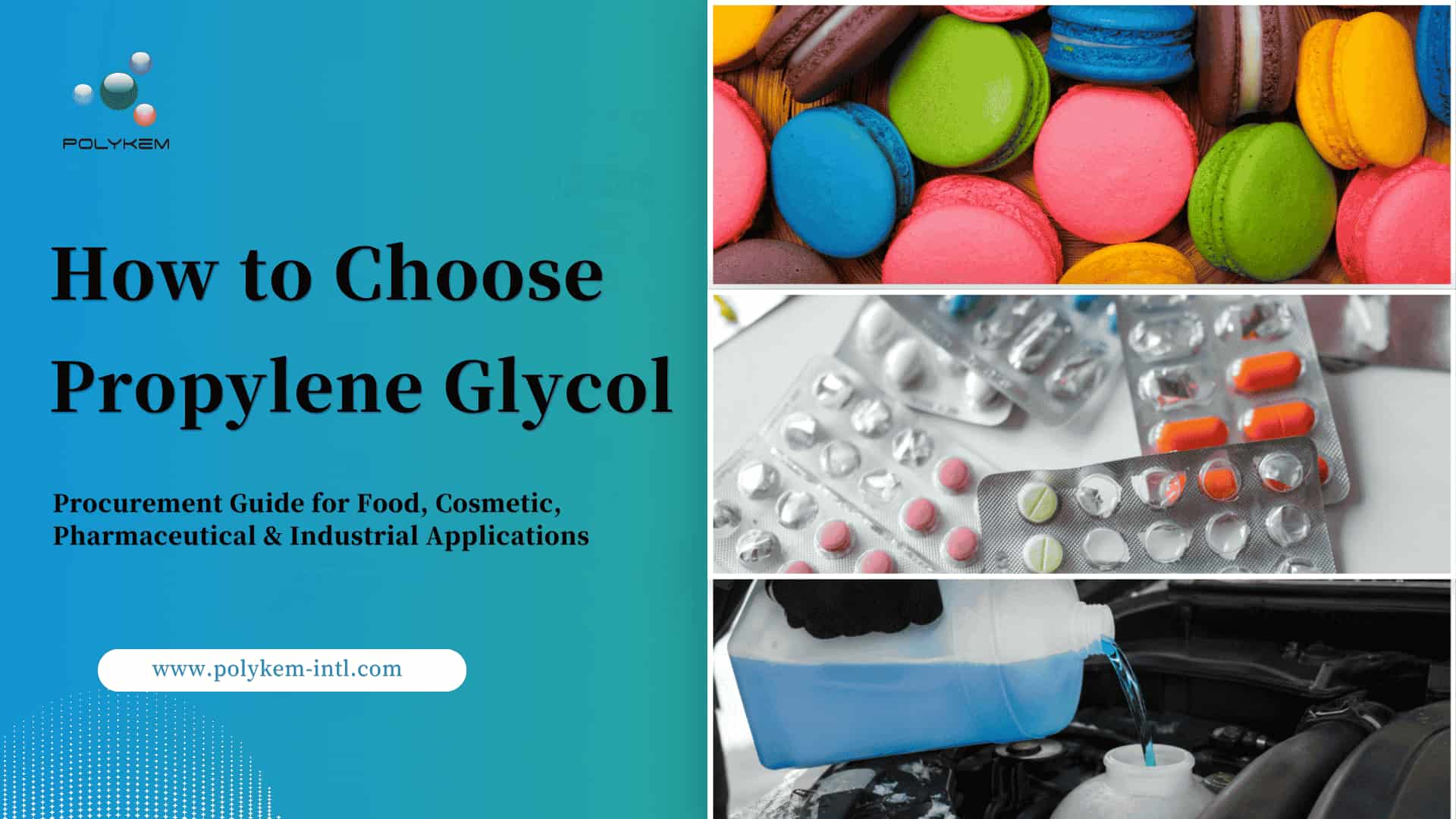
Propylene Glycol, also known as PG or 1,2-propanediol, is widely used in food flavors, cosmetics, pharmaceutical formulations, antifreeze fluids, heat transfer systems and unsaturated polyester resin production. For procurement teams, PG is not a product that should be selected only by price or purity percentage. Different applications may require different grades, impurity controls, document support and packaging arrangements.


In actual purchasing, problems often come from choosing the wrong grade, not from the product name itself. Industrial grade Propylene Glycol may be suitable for antifreeze fluids or resin production, but it should not be used as a direct substitute for food grade Propylene Glycol or pharmaceutical grade Propylene Glycol. If the application and specification are not confirmed before ordering, buyers may face sample rejection, internal approval delays, missing documents or material that cannot be used after arrival.


As a China Propylene Glycol supplier with more than ten years of experience, Polykem has seen how different buyers choose PG for food, cosmetic, pharmaceutical and industrial applications. This article shares the main points to check before ordering, including grade, specifications, documents and packaging.


Confirm the Final Application and Propylene Glycol Grade Selection Reference


The first step in selecting Propylene Glycol is not asking for the lowest price. It is confirming the final use. To make the comparison easier, Polykem has prepared the following reference table to help buyers quickly match common applications with suitable PG grades and key specification items.


Application Area
Suggested Grade
Key Items to Confirm
Procurement Judgment
Food flavors and color carriers
Food grade / FCC grade Propylene Glycol
Assay, color, odor, acidity, heavy metals, chlorides
Do not replace with industrial grade. Confirm food-related documents before ordering.
Cosmetics and personal care
Cosmetic grade / food grade / USP grade, depending on formulation
Purity, water, odor, color, acidity, impurity profile
Focus on batch consistency to avoid odor, texture or formulation adjustment issues.
Pharmaceutical applications
USP / EP / pharmaceutical grade Propylene Glycol
Assay, water, acidity, specific gravity, ethylene glycol, diethylene glycol, heavy metals
Review against the target standard instead of selecting by price alone.
Antifreeze and heat transfer fluids
Industrial grade Propylene Glycol
Purity, water, acidity, chloride content, specific gravity, color
Water and acidity may affect freezing protection and corrosion tendency.
Unsaturated polyester resin
Industrial grade / resin-grade PG
Purity, water, acidity, color, distillation range
Water and acidity may influence reaction stability and downstream processing.
*This table can be used as an initial reference, but the final decision should always be based on the customer’s application, target standard and the supplier’s actual specification sheet.


What Should Buyers Check on the COA?


Many buyers ask suppliers for a COA, but having a COA is not enough. The key is whether the tested items on the COA match the application requirements.

For PG procurement, buyers should pay attention to the following items:


COA Item
Why It Matters
Assay
Confirms whether the main component meets the required grade.
Water
High water content may affect antifreeze performance, resin reaction or formulation stability.
Acidity
Higher acidity may influence corrosion tendency, reaction stability or formulation performance.
Color
Important for food, cosmetic and transparent systems.
Odor
Important for flavors, cosmetics and personal care products.
Specific Gravity
Helps confirm product consistency and specification compliance.
Ethylene Glycol
Needs strict control in food, pharmaceutical and high-requirement applications.
Diethylene Glycol
A key item for pharmaceutical, food and other sensitive applications.
Heavy Metals
Commonly reviewed in food, pharmaceutical and some personal care applications.
Chlorides
May be related to corrosion risk in antifreeze and heat transfer systems.


If the customer has an internal specification, it should be shared with the supplier during the inquiry stage. This helps avoid delays after sample approval or bulk order confirmation.


Food Grade Propylene Glycol Buying Points


Food grade Propylene Glycol is commonly used as a carrier for flavors, colors and other food-related ingredients. For this application, a “high purity” description is not enough. Buyers should confirm whether the selected grade matches food-related requirements.


Food and flavor customers usually need to check:


  • Whether the product is food grade or FCC grade PG;Whether COA, MSDS, TDS and other documents are available;
  • Whether color and odor are suitable for the target formulation;
  • Whether heavy metals, chlorides and residual solvents meet the required limits;
  • Whether batch consistency is suitable for regular supply.


If the customer uses PG in exported food ingredients or flavor products, destination-market requirements and end-customer standards should also be confirmed in advance.


Cosmetic Grade Propylene Glycol Buying Points


In cosmetics and personal care products, Propylene Glycol is often used as a humectant, solvent and formulation-supporting ingredient. For these customers, stable quality is often more important than the lowest price.

When purchasing cosmetic grade Propylene Glycol, buyers should focus on odor, color, water content and impurity profile. If PG is used in leave-on products, transparent gels, serums or emulsions, changes in odor or color may directly affect the finished product.

For long-term production, it is better to check the bulk supply specification during the sample approval stage. This reduces the risk of a sample passing evaluation while the later bulk material creates adjustment problems.


Pharmaceutical Grade Propylene Glycol Buying Points


For pharmaceutical orders, the grade needs to be checked against the required standard before anything else. Some customers ask for USP, some require EP, and some have their own internal limits. Do not judge only by the name “Propylene Glycol” or “PG.” Before sample approval, it is better to review the COA and confirm assay, water, acidity, specific gravity, ethylene glycol, diethylene glycol and heavy metals. If batch traceability or extra documents are needed, mention this at the inquiry stage.


Industrial Grade Propylene Glycol Buying Points


Industrial grade Propylene Glycol is commonly used in antifreeze fluids, heat transfer systems, chemical processing and unsaturated polyester resin. In these applications, buyers usually care more about stable performance and delivery than pharmaceutical-level controls. For antifreeze or heat transfer use, water, acidity and chloride content are worth checking because they may affect low-temperature performance and corrosion risk. For resin production, water and acidity should not be ignored, as they can change reaction stability during production.


How to Choose Packaging for Propylene Glycol


Common PG packaging includes drums, IBC tanks and bulk shipment. Different packaging options fit different purchasing volumes and factory conditions.

Drums are commonly used for trial orders, small-volume orders or customers that need flexible storage and staged consumption. IBC tanks are suitable for medium-volume procurement and can improve unloading and production efficiency. Bulk shipment or tanker delivery may be considered for large-volume or long-term procurement to reduce packaging and logistics costs.

Before confirming packaging, buyers should check storage conditions, unloading equipment, single-batch consumption and delivery frequency. If the warehouse does not have suitable handling or liquid transfer equipment, packaging should not be selected by unit price alone.


How Polykem Supports Propylene Glycol Procurement


Polykem supplies Propylene Glycol for food, cosmetic, pharmaceutical-related and industrial applications. Based on the customer’s final use, Polykem can help confirm the suitable PG grade and specification direction.


For different purchasing needs, Polykem can support:

  • PG grade selection based on final application;Available specification information for internal review;
  • COA, MSDS, TDS and other documents according to order requirements;
  • Packaging options including drums, IBC tanks and bulk shipment;
  • Stable supply and export delivery coordination for regular procurement.


For customers who are not sure whether to choose food grade, pharmaceutical grade, cosmetic grade or industrial grade Propylene Glycol, it is better to provide the application, target standard, annual volume, packaging preference and destination port during inquiry. This allows Polykem to recommend a more suitable supply plan and reduce repeated communication.


Before sending an inquiry, customers can prepare the final application, target grade, key specification requirements, estimated quantity, preferred packaging and destination port. These details can help Polykem check a suitable PG option more quickly.


Pre-Order Checklist for Propylene Glycol Buyers


Before confirming a PG order, buyers can review the following checklist:

Application - Food, cosmetic, pharmaceutical, antifreeze, heat transfer fluid or resin production

Product grade - Food grade, pharmaceutical grade, cosmetic grade, industrial grade or resin-grade PG

Key specifications - Purity, water, acidity, color, specific gravity, impurities, heavy metals

Documents - COA, MSDS, TDS, specification sheet or other customer approval documents

Packaging - Drums, IBC tanks or bulk shipment

Quantity - Trial order, small batch, full container or long-term contract

Delivery terms - Lead time, destination port, shipping method and customs documents


This checklist is simple, but it helps reduce procurement risk. For food, pharmaceutical and cosmetic customers, documents and specifications should be confirmed during the sample stage, not after the bulk order is placed.


Conclusion


At Polykem, we do more than supply Propylene Glycol. We care about making the purchasing process easier for our customers. From PG grade selection and specification review to documents, packaging and shipment coordination, our team helps buyers reduce unnecessary back-and-forth before placing an order.

Polykem also supplies related solvents and glycols, including Polyethylene Glycol (PEG), Diethylene Glycol (DEG), Triethylene Glycol and Monoethylene Glycol. If you are sourcing several materials for one project, our team can help compare product options, prepare the required documents, arrange suitable packaging and coordinate shipment.


Please send us your target application, required quantity and destination port, or visit our Products page to explore more available chemicals. Our team will promptly confirm the suitable grade and provide an accurate quotation.


Related News
Leave me a message
X
We use cookies to offer you a better browsing experience, analyze site traffic and personalize content. By using this site, you agree to our use of cookies. Privacy Policy
Reject Accept