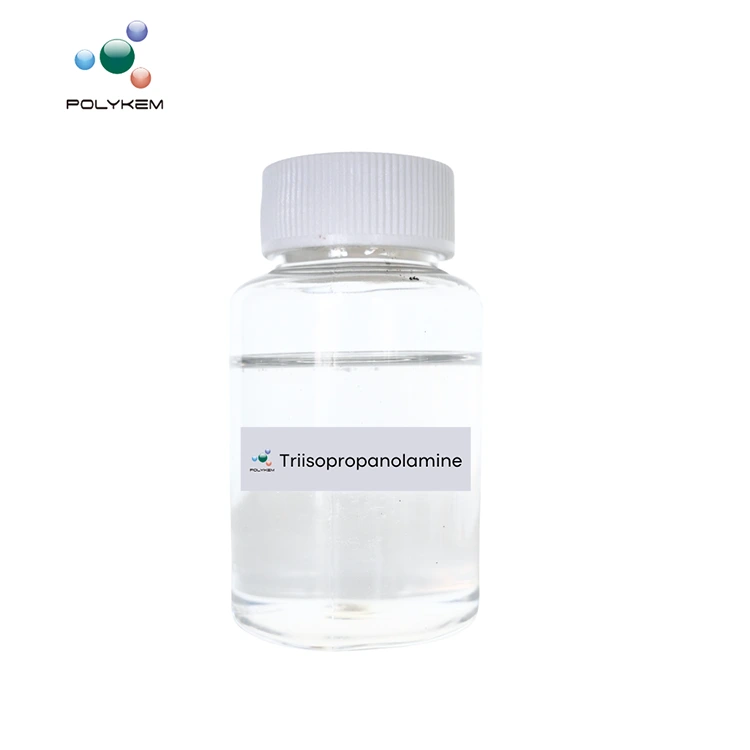
Triisopropanolamine (TIPA) is a new generation of steric hindrance alkylamine compounds. It contains three hydroxyl groups and one tertiary amine group in its molecular structure and has unique stereochemical properties. As a high-end fine chemical, excellent performance in the field of building materials and special materials.
Triisopropanolamine, also known as TIPA, is an alkanolamine compound containing hydroxyl groups and a tertiary amine structure. It is commonly used in cement grinding aids, metalworking fluids, polyurethane systems and selected formulation applications where alkalinity, compatibility and performance adjustment are required.
Polykem supplies Triisopropanolamine from its own production plant, with available options including building grade, electronic grade and customized composite solutions. Typical specifications can include building grade ≥98.5% and electronic grade ≥99.5%, depending on the required application. We also support bulk packaging, spot supply and delivery from major ports according to order requirements.
Product Parameter
CAS No.122-20-3
Chemical Formula: N(CH2CHOHCH3)3
Triisopropanolamine (TIPA) Chemical Index
Appearance
Colorless to light yellow liquid
Water content, %(m/m)
10.0 - 15.0
MIPA+DIPA content, %(m/m)
≤3
Main content, %(m/m)
≥85
Color (PT-CO)
≤60
Packing
195 Kg/drum、IBC
Product Features and Grade Selection
1. Hydroxyl and tertiary amine structure
Triisopropanolamine contains hydroxyl groups and a tertiary amine structure, which gives it useful performance in systems requiring alkalinity adjustment, compatibility support and formulation modification. This structure also makes TIPA suitable for cement additives, metalworking fluids, polyurethane-related systems and selected fine chemical applications.
2. Different grades for different application needs
TIPA should be selected according to the final application rather than product name alone. Building-grade TIPA is commonly used in cement grinding aids and cement additive systems, where dosage cost, grinding performance and stable supply are important. Electronic-grade TIPA is more suitable for applications that require higher purity, better color control and lower impurity levels.
3. Main content affects dosage and performance
The main content of TIPA directly affects addition level, formulation performance and cost calculation. For cement additive or industrial formulation customers, confirming the required content range before ordering helps ensure more stable use in production.
4. Water content and color should match the application
Water content may influence storage stability, cement additive systems and polyurethane-related applications. Color is also important for products where appearance, transparency or final product quality is a concern. Buyers should confirm these indicators according to their own production requirements.
5. MIPA + DIPA content and batch consistency
The level of MIPA + DIPA can be used as a reference for by-product control and batch consistency. For customers who use TIPA in continuous production, stable specifications help reduce formulation adjustment during repeated purchasing.
Applications
Cement modification: Used as an efficient grinding aid in cement additive systems.
Metalworking: Used in cutting fluids to support alkalinity control and formulation stability.
Polyurethane: Used as a functional amine component in selected catalyst or crosslinking systems.
Personal care: Used in selected cosmetic emulsions to support pH adjustment and formulation stability.
Packaging Options
Triisopropanolamine is available in 195 kg drums and IBC packaging. Polykem can discuss suitable packaging and delivery arrangements according to order quantity, storage needs and export shipment requirements.
FAQ
Q1: What TIPA grades can Polykem supply?
A: Polykem can supply building grade, electronic grade and customized composite solutions. The suitable grade should be confirmed according to purity requirement, application field and downstream processing needs.
Q2: What information should be provided before requesting a quotation?
A: Customers are advised to provide the required grade, target content, application, order quantity, packaging preference and destination port. This helps Polykem provide a more accurate quotation and delivery plan.
Q3: How should Triisopropanolamine be stored?
A: TIPA should be stored in a sealed container in a cool, dry and well-ventilated place. It should be kept away from strong oxidizing agents and direct sunlight during storage.
Q4: How does Polykem support batch consistency?
A: Polykem has a professional testing team to check key indicators such as main content, water content, color and MIPA + DIPA content. Before shipment, product specifications can be confirmed according to customer requirements, helping buyers maintain more stable performance in repeated purchasing and production use.
For inquiries about synthetic rubber, rubber additives, hydrocarbon resin or price list, please leave your email to us and we will be in touch within 24 hours.
We use cookies to offer you a better browsing experience, analyze site traffic and personalize content. By using this site, you agree to our use of cookies.
Privacy Policy