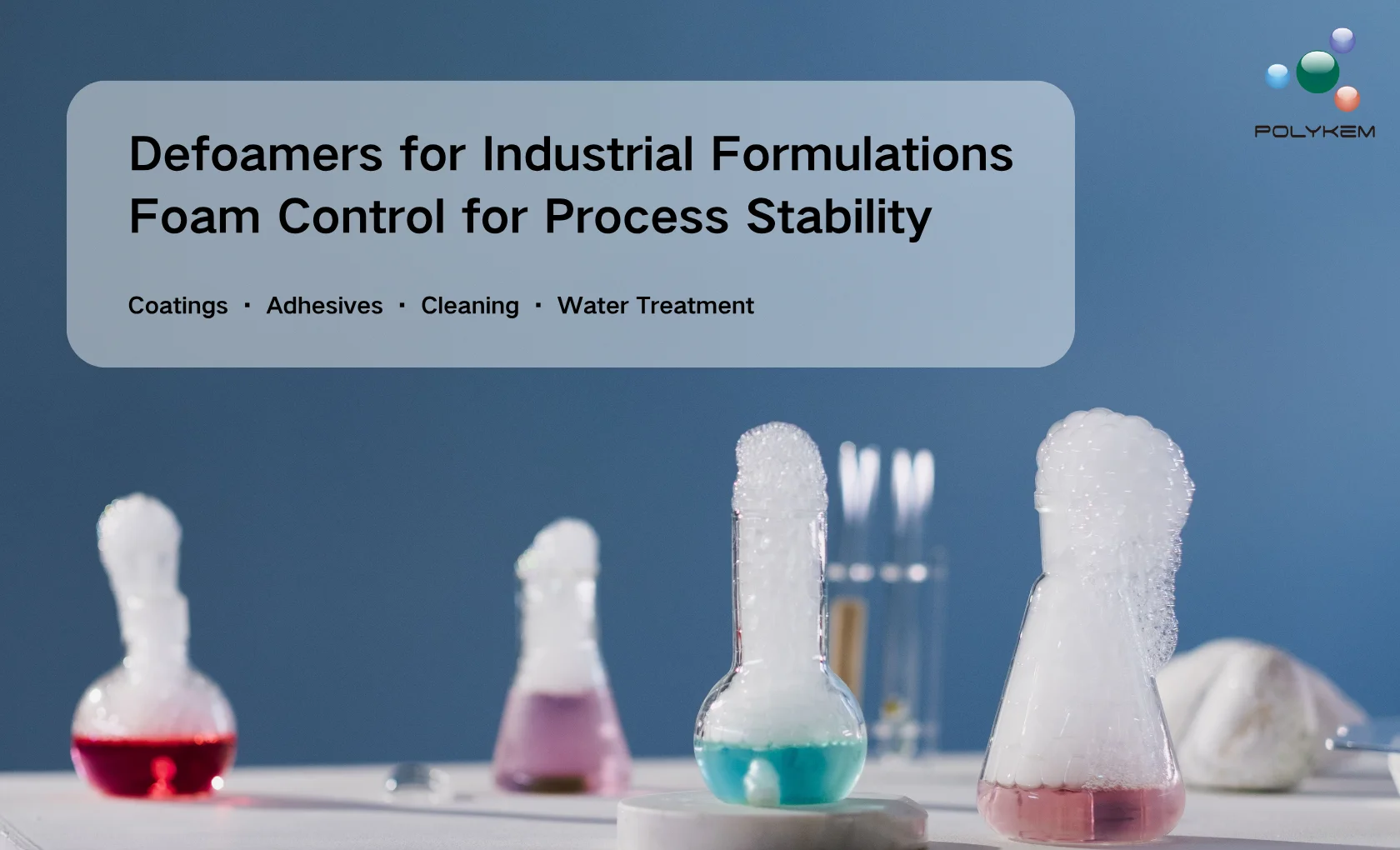
Foam is not always a big problem at the beginning of a formulation. In many production lines, it only becomes noticeable when mixing takes longer than expected, coating surfaces show small defects, tanks cannot be filled efficiently, or cleaning steps become harder to control. At that point, the discussion usually turns to defoamers.
For manufacturers, the purpose of a defoamer is not simply to “remove bubbles.” The real goal is to keep the production process stable. Too much foam may affect dispersion, reduce effective tank volume, slow down filling, create uneven coating surfaces or make wastewater treatment more difficult. In some systems, foam also causes extra rework that was never part of the original plan.
Defoamers are widely used in coatings, adhesives, textile auxiliaries, detergents, papermaking, water treatment and polymer processing. Their performance varies with the formulation environment, particularly the continuous phase, operating temperature, pH, shear level and other raw materials in the system. Therefore, defoamer selection usually requires testing in the actual formulation rather than relying solely on general product recommendations.
In coating and adhesive formulations, inadequate foam control can directly affect the finished surface. Air trapped during production or application may result in pinholes, craters and an uneven film. Besides rapid foam elimination, the selected defoamer should remain compatible with the resin or binder and avoid causing surface defects or loss of clarity.
In cleaning and textile formulations, foam is sometimes useful, but excessive foam can still affect production or application. A detergent may need controlled foam during use, while a textile processing bath may require faster foam collapse to keep the process running smoothly. This is why defoamer selection is usually linked to the actual application rather than the product name alone.
In water treatment and industrial processing, foam can reduce equipment efficiency and make operation harder to manage. Customers in this field usually care about dosage, foam knockdown speed, persistence and whether the defoamer affects the rest of the system. In practical use, the best choice often comes from small-scale testing before regular production.
When customers discuss defoamers with Polykem, the first question is usually about the system itself. Is it water-based or oil-based? What is the pH range? Is the process under high shear? Will the defoamer be added during production or at the final stage? These details help narrow down the suitable direction and reduce unnecessary trial-and-error.
Polykem supplies defoamer-related products and other functional additives for industrial formulation customers. Our team can communicate with customers based on application type, formulation system, processing conditions, packaging needs and documentation requirements.
Beyond defoamers, Polykem also supports related functional additive products, including Biocides, Wetting Agents, Thickeners, Colony Regulators, Fermentation Enhancers and other formulation additives. These products can be discussed for coatings, adhesives, cleaning formulations, textile auxiliaries, water treatment, fermentation-related systems and broader industrial production applications.
If foam control or additive selection has become a production issue in your formulation, contact Polykem for product information, specifications and sourcing support from China.