News

ECO Rubber vs HNBR: Choosing the Right Material for Your Application

2026-08-10 0 Leave me a message


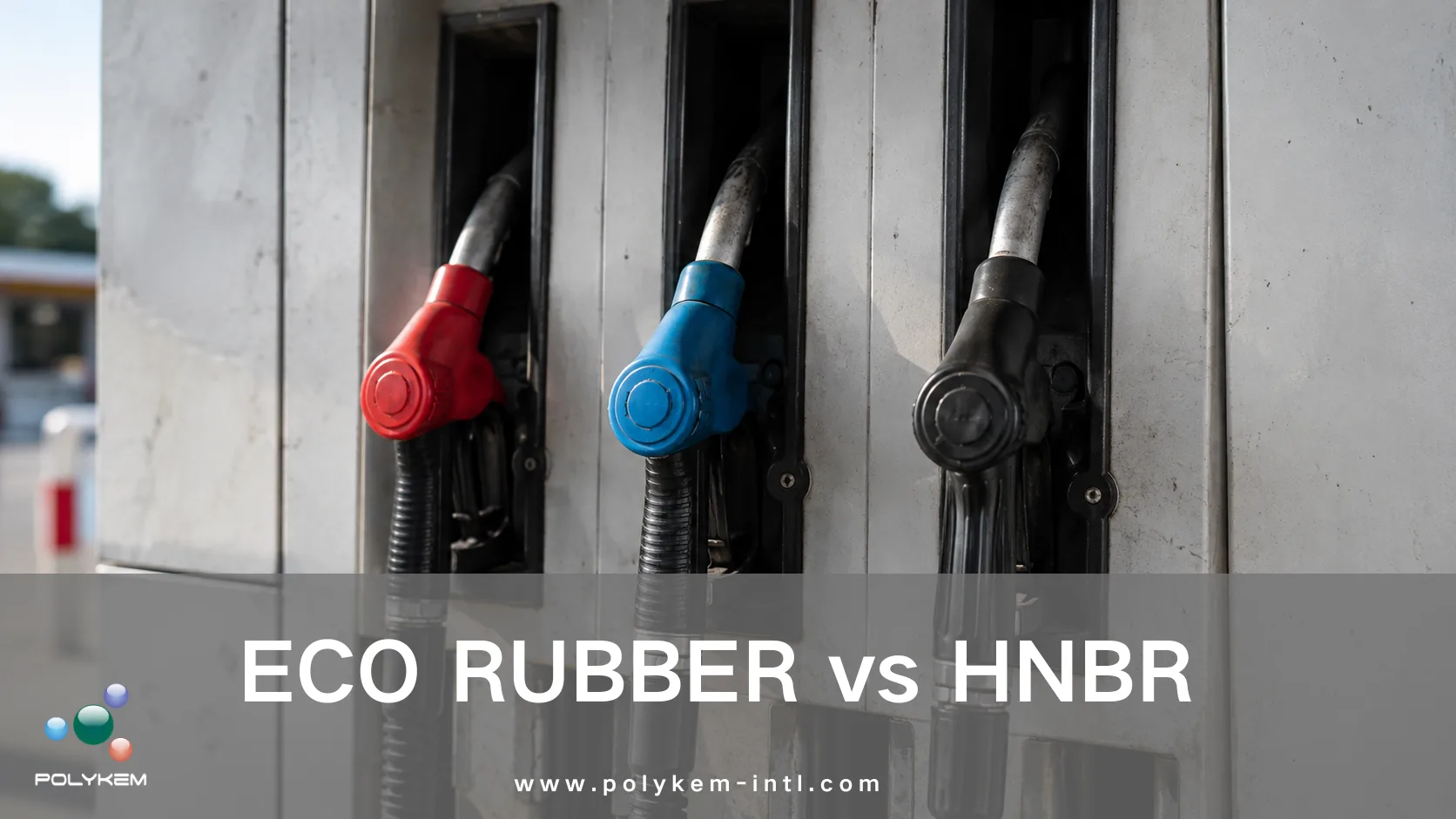
A fuel-system seal works well at room temperature, but what happens after months of contact with hot fuel? A hose may show low fuel-vapor loss, yet become unsuitable when the surrounding temperature rises.


Polykem recommends choosing between ECO rubber and HNBR according to the actual service conditions. Both can be used in components exposed to fuels, lubricants and automotive fluids.


ECO is often considered when low permeability and low-temperature flexibility matter. HNBR may be more suitable when higher heat resistance, mechanical strength and long-term durability are required.


What Does ECO Rubber Offer?


Polyepichlorohydrin, commonly known as ECO rubber, is a specialty elastomer used in fuel hoses, vapor lines, diaphragms, seals and gaskets.


Its low gas permeability is particularly useful where a rubber component must limit the movement of fuel vapor or gas. ECO also provides resistance to fuel, oil, ozone and weathering, while selected grades retain flexibility at low temperatures.


That combination explains why ECO is found in fuel-system components rather than only in general oil-resistant parts. A hose cover, barrier layer and molded seal may still require different grades and compound designs, so the material should be selected around the complete component.


Where Does HNBR Have an Advantage?


Hydrogenated Nitrile Rubber (HNBR) is produced by hydrogenating nitrile rubber. This change improves the stability of the polymer and supports better performance under heat, oxidation and mechanical stress.


HNBR is frequently used in engine seals, O-rings, timing belts, oilfield components and hoses exposed to hot fluids. It is especially relevant when the rubber must retain strength or sealing force at elevated temperatures.


This does not mean that every HNBR grade is automatically suitable for every fuel. Its fluid resistance is influenced by factors such as ACN content, hydrogenation level and compound formulation. Low-temperature performance also varies between grades.


Fuel Contact Is Not the Only Selection Factor


Both ECO and HNBR can be used in rubber components exposed to fuels and oils, but they have different performance priorities. The fluid type, operating temperature, permeability and mechanical demands must also be considered.


Polykem recommends identifying the component’s main challenge first. ECO may be evaluated when controlling fuel-vapor permeation is important, while HNBR is often considered for prolonged heat, hot oils or higher mechanical stress.


Selection factor
ECO rubber
HNBR
Main priority
Balance of low permeability and fuel resistance
High-temperature performance and mechanical durability
Fuel and oil contact
Useful where fuel-vapor control matters
Suitable for hot oils and certain industrial fluids
Temperature
Balances heat resistance with low-temperature flexibility
Better suited to prolonged high-temperature service
Mechanical demands
Commonly used in hose layers, diaphragms and seals
Suitable for parts exposed to strength, wear or dynamic stress
Typical applications
Fuel hoses, vapor lines, diaphragms and gaskets
Engine seals, O-rings, belts and oilfield components

Choosing Between ECO Rubber and HNBR


Choose the material around the most difficult part of the service environment.


If fuel-vapor control, ozone resistance and low-temperature flexibility are central to the design, ECO deserves closer evaluation. If the component faces greater heat, mechanical stress or hot-fluid exposure, HNBR may offer a better performance balance.


Some applications fall between these two descriptions. In that situation, compare actual grades rather than choosing by polymer name. Provide the supplier with the contact fluid, continuous and peak temperatures, pressure, component type, processing method and required test standard.


Polykem supplies ECO rubber and HNBR options for industrial and automotive applications. Buyers can contact us with an existing reference grade or operating requirements to discuss available product information, samples and technical documents.


Contact Polykem to compare materials for your application.


Related News
Leave me a message
X
We use cookies to offer you a better browsing experience, analyze site traffic and personalize content. By using this site, you agree to our use of cookies.Privacy Policy
RejectAccept