News

How to Choose Ethylene Glycol for Industrial Applications: Grade, Purity and Specifications

2026-07-20 0 Leave me a message


How can three clear liquids that look almost identical end up doing completely different jobs? MEG may be fed into a PET production line, DEG used to control drying in a coating formulation, and TEG circulated through a natural gas dehydration unit.


The real purchasing challenge lies in the details. Once the glycol type has been confirmed, differences in moisture, acidity, color, impurity profile, documentation and packaging can still affect processing, quality control and delivery arrangements.


What Is Ethylene Glycol?


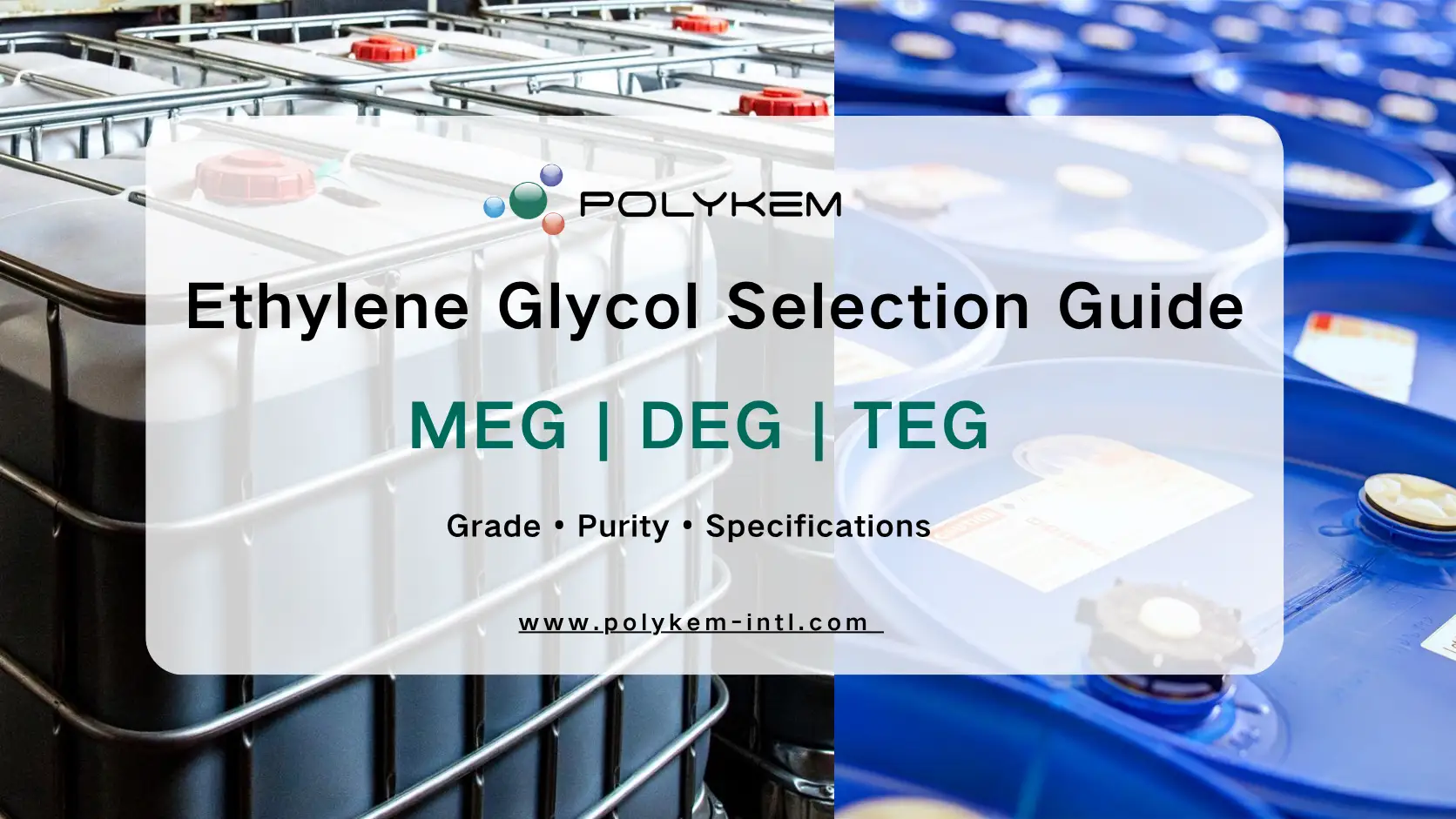
The term ethylene glycol commonly refers to monoethylene glycol (MEG), a colorless, hygroscopic liquid that is miscible with water. Polykem’s ethylene glycol product range also includes diethylene glycol (DEG) and triethylene glycol (TEG).


These products differ in molecular structure, boiling behavior, viscosity, hygroscopicity and application suitability. Buyers should select the appropriate product and grade according to their production process and technical requirements.


Ethylene Glycol Selection Guide by Industrial Application


Industrial Application
Recommended Glycol Type
Why It Is Selected
PET resin and polyester fiber production
Monoethylene Glycol (MEG)
Used as a key raw material in polyester production. Purity, water content and impurity control are important for stable polymerization.
Antifreeze and heat-transfer fluids
Monoethylene Glycol (MEG)
Provides suitable freezing-point reduction and thermal transfer performance for cooling systems.
Coatings, inks and chemical formulations
Diethylene Glycol (DEG)
Selected for its solvent compatibility and formulation flexibility in systems requiring controlled evaporation and balanced performance.
Natural gas dehydration
Triethylene Glycol (TEG)
Used to remove moisture from gas streams due to its strong hygroscopic properties and regeneration capability.

This table provides a general guide for selecting ethylene glycol products. Actual requirements may vary depending on process conditions, product specifications and quality standards.


Which Ethylene Glycol Specifications Matter?


An industrial ethylene glycol specification normally contains several quality indicators. Depending on the product and application, buyers may need to review:


 - PurityWater contentAcidity

 - Color and appearance

 - Density or specific gravity

 - Other glycol contentIron and other trace impurities


Purity is important, but it does not tell the whole story. Two products with similar assay values may differ in moisture, acidity, color or impurity profile. These differences can affect reaction control, formulation consistency and finished-product quality.


The specification should also identify the relevant test methods. A Certificate of Analysis can then be used to compare the delivered batch with the agreed requirements.


How Purity and Water Content Affect Performance


The appropriate purity depends on the application. Choosing the highest available figure is not always necessary, while accepting a grade below the process requirement can lead to production problems.


Water content deserves particular attention because glycol products absorb moisture from the surrounding environment. Depending on the process, excess water may change material concentration, increase drying requirements or affect reaction efficiency.


In polyester production, moisture and impurities can influence processing stability and final resin quality. In heat-transfer formulations, water changes concentration and thermal behavior. For gas dehydration, glycol concentration has a direct relationship with water-removal performance.


Buyers should therefore assess purity and moisture together rather than treating either value as an isolated purchasing target.


Check Product Documents Before Ordering


Before confirming an order, request the documents needed for technical review, safe handling and import procedures. These may include:


  • Product specificationTechnical Data Sheet
  • Safety Data Sheet
  • Certificate of Analysis
  • Packaging information
  • Regulatory documents where applicable
  • Check that the product name, grade, CAS number and specification are consistent across the quotation and supporting documents.


When a particular standard or test method is mandatory, state it during the inquiry rather than after production or shipment has been arranged.


Storage and Handling Considerations


Moisture pickup often happens after delivery rather than during transport. A drum may be opened for sampling, left unsealed during a production pause, or fitted with a transfer line that allows humid air to enter. Since glycol absorbs water readily, even a product that arrived within specification can change during storage.


Check the seal and container condition when the shipment is received. After sampling, close the drum or IBC immediately. Pumps, hoses and receiving tanks should be clean and dry before transfer, and material taken out for testing should not be poured back into the original container. For bulk storage, follow the supplier’s recommendations for tank materials, venting and moisture control.


Keep the product label, batch number and hazard information visible throughout storage. Do not place glycol beside strong oxidizing agents, and avoid using an unmarked container for temporary transfer.


Ethylene glycol is harmful if swallowed. Staff involved in unloading, sampling or production should review the current Safety Data Sheet, use the specified protective equipment and know the site procedure for leaks, spills and disposal.


Why Choose Polykem for Ethylene Glycol Supply?


Polykem supplies ethylene glycol product range for polyester production, heat-transfer formulations, natural gas dehydration, coatings and other industrial applications.


Based on your purchasing and production requirements, our team can provide:


  1. MEG, DEG and TEG product matching
  2. Product specifications, SDS and COA documentation
  3. Drum, IBC, bulk and ISO tank supply options
  4. OEM Customized packaging support
  5. Export and logistics coordination
  6. Quotations for regular and bulk purchases


To receive relevant product information, please provide the required glycol type, application, target specification, quantity, packaging and delivery destination.


Contact Polykem to discuss your ethylene glycol requirements and request a quotation.


Related News
Leave me a message
X
We use cookies to offer you a better browsing experience, analyze site traffic and personalize content. By using this site, you agree to our use of cookies.Privacy Policy
RejectAccept