Do you know AEO-3 and how it differs from other Lauryl Alcohol Ethoxylate grades? Lauryl Alcohol Ethoxylate AEO-3 is a low-EO nonionic surfactant produced by reacting lauryl alcohol with approximately three moles of ethylene oxide.
AEO-3 is generally considered when a formulator needs oil-phase compatibility, emulsification or wetting rather than complete solubility in water. It is used in a range of industrial systems, including textile auxiliaries, industrial cleaners, metalworking formulations and emulsifier blends. However, choosing AEO-3 simply because it belongs to the Lauryl Alcohol Ethoxylate family is not enough. Its solubility and emulsification behavior should match the actual formulation.
How AEO-3 Differs from Higher-EO Grades
The number following “AEO” indicates the approximate degree of ethoxylation. As the EO number increases, the surfactant usually becomes more hydrophilic. AEO-7 and AEO-9 therefore offer better water dispersibility than AEO-3 and are often selected for water-based cleaning and textile systems.
AEO-3 sits closer to the oil-soluble end of the series. Its lower EO content allows it to interact more readily with oils and other hydrophobic ingredients, while the ethoxylated portion still provides surface activity. This balance makes it useful as a component in emulsifier systems, particularly where a higher-EO surfactant alone would be too hydrophilic.
This does not mean that AEO-3 is automatically better for oil-containing formulations. The required HLB balance, oil type, operating temperature and other surfactants in the system all affect the final result. In many cases, AEO-3 is blended with a more hydrophilic nonionic surfactant to obtain the desired emulsification and stability.
Where Lauryl Alcohol Ethoxylate AEO-3 Is Used
In textile processing, AEO-3 is used in auxiliary formulations requiring wetting, emulsification and compatibility with oily materials.
In industrial cleaning, it helps remove oily soils and improve contact with hydrophobic residues. Due to its limited water solubility, AEO-3 is often blended with more hydrophilic surfactants to balance cleaning, rinsing and formulation stability.
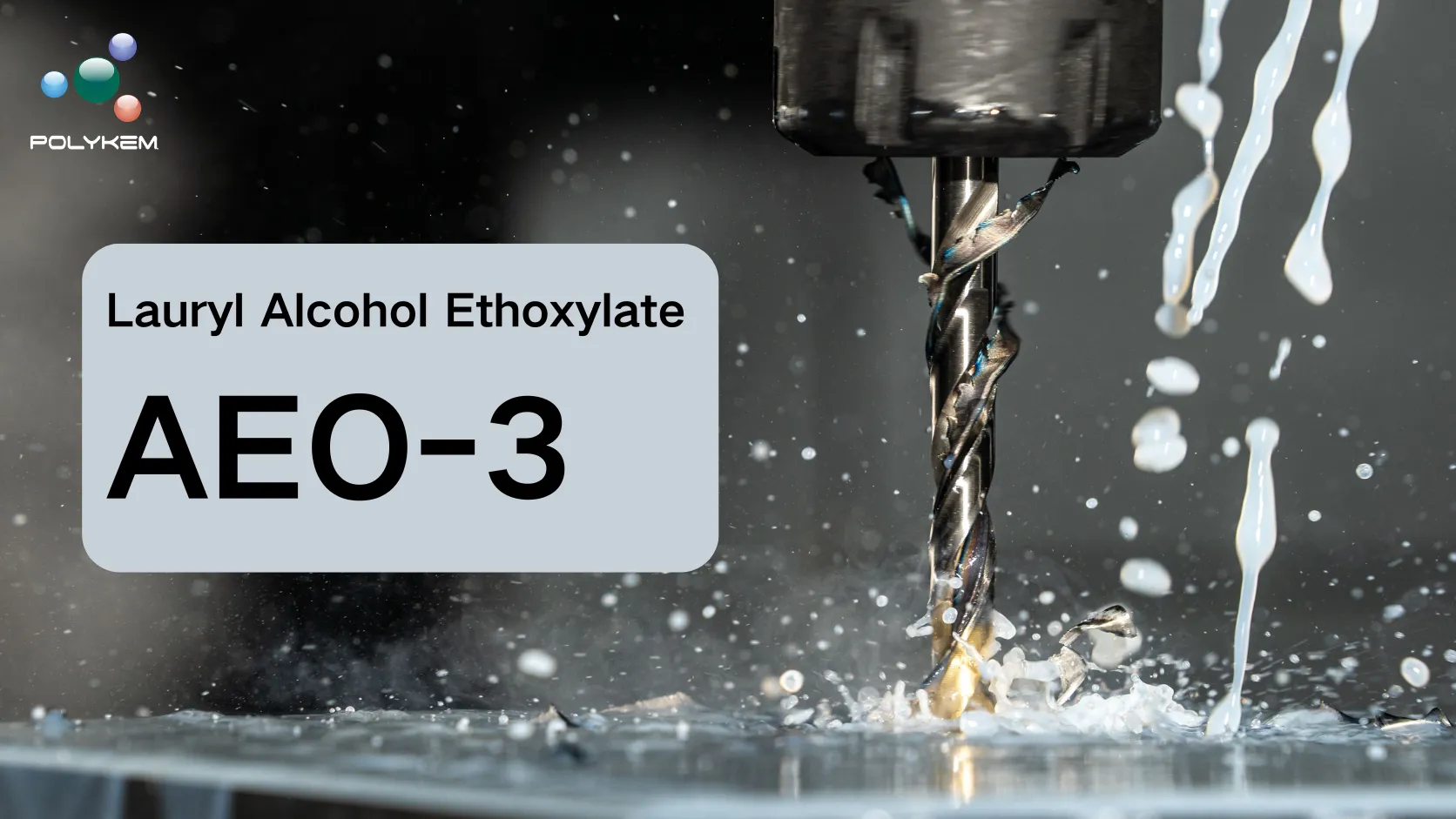
AEO-3 can also be used in metalworking fluids and industrial emulsions. Its performance may vary with the oil type, water hardness, temperature and dosage, so formulation testing is recommended.
AEO-3 is suitable when oil compatibility and emulsification are the main requirements. For water-rich systems requiring rapid dissolution, a higher-EO grade may be more appropriate.
What Specifications Should Be Checked When Purchasing AEO-3?
Product names alone may not be enough to confirm the correct AEO-3 grade. Buyers should compare the supplier’s specifications with their formulation and processing requirements before purchasing.
| Key Parameter | Why It Matters |
| Appearance and Color | Helps confirm product condition and suitability for appearance-sensitive applications |
| Hydroxyl Value | Helps verify the ethoxylation level and evaluate batch consistency |
| Water Content | May affect dispersibility, processing and formulation stability |
| pH Value | Helps assess compatibility with the intended formulation |
Buyers should also request the relevant COA, TDS and SDS and confirm packaging and storage requirements. Because temperature changes may affect the appearance and flowability of AEO-3, storage and unloading conditions should be discussed in advance when the product will be handled in a cold environment.
Polykem AEO-3 Supply and Grade Support
Polykem supplies Lauryl Alcohol Ethoxylate products for industrial cleaning, textile processing, emulsification and other industrial formulations. Customers can share their application, formulation type and performance requirements with us to confirm whether AEO-3 or another AEO grade is more suitable.
For buyers looking for a Lauryl Alcohol Ethoxylate supplier in China, Polykem can provide product specifications, COA, TDS, SDS and customized packaging support.
Free samples are also available for formulation testing before bulk purchasing. Customers can evaluate dispersibility, emulsion stability, cleaning performance, foam behavior and compatibility with other ingredients under their actual formulation conditions.
Contact us to confirm the appropriate AEO grade and request a free sample.