When standard additives cannot fully meet a formulation's performance targets, Polykem provides Customized Additives solutions designed around specific application requirements, formulation systems, and production conditions. By combining technical support with sample testing, Polykem helps customers develop additive solutions that improve compatibility, stability, efficiency, and overall product performance.
Customized additives are becoming increasingly important as manufacturers seek better-performing formulations without compromising production efficiency or product consistency. Unlike off-the-shelf additives, customized solutions can be developed around specific technical requirements, including viscosity, stability, solubility, surface activity, dispersion, processing behavior, or compatibility with an existing formulation.
Polykem offers customized additive solutions for customers across industrial applications, daily chemicals, agriculture, food processing, cosmetics, pharmaceuticals, plastics, and rubber processing. Its technical team works with customers to understand formulation challenges, identify suitable additive strategies, and support sample testing before larger-scale implementation.
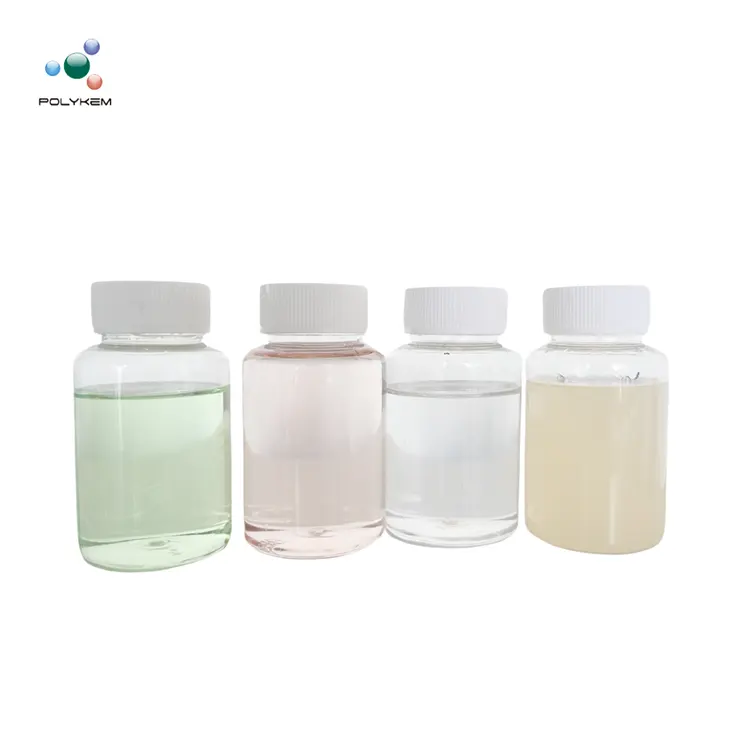
Table of Contents
- What Are Customized Additives?
- Why Are Customized Additives Important?
- Where Are Customized Additives Used?
- What Are the Main Benefits of Customized Additives?
- How Does the Customized Additives Development Process Work?
- What Should Buyers Consider When Selecting Customized Additives?
- Why Choose Polykem for Customized Additives?
- Frequently Asked Questions About Customized Additives
- Conclusion
What Are Customized Additives?
Customized additives are functional chemical components developed or selected to address specific performance requirements within a formulation or manufacturing process. Instead of relying exclusively on standardized additive grades, manufacturers can work with a technical supplier to determine an additive system that better matches their raw materials, processing equipment, product specifications, and end-use requirements.
In practical applications, an additive may influence one or several important properties. Depending on the formulation, the target may include improving stability, modifying viscosity, enhancing dispersion, controlling foam, improving surface wetting, supporting solubility, or adjusting physical and chemical properties.
This makes customized additives particularly valuable when a standard commercial product creates problems such as poor compatibility, insufficient stability, inconsistent processing performance, or inadequate end-product characteristics.
For manufacturers, the objective is not simply to obtain a new chemical ingredient. The real goal is to achieve a better-performing formulation through a more precisely matched additive solution.
Why Are Customized Additives Important?
Modern formulations are becoming more application-specific. Two products may use similar base materials but operate under very different temperatures, shear conditions, pH environments, production speeds, or storage requirements. A standardized additive that performs well in one system may therefore deliver limited results in another.
Customized additives address this challenge by focusing on the relationship between the additive and the complete formulation.
- Formulation compatibility: The additive can be evaluated against the customer's existing raw materials and formulation system.
- Performance optimization: Development can focus on specific targets rather than relying on general-purpose performance.
- Process adaptation: Additive selection can consider production-line conditions and processing requirements.
- Product differentiation: A better additive system can help manufacturers achieve characteristics that distinguish their products.
- Development efficiency: Sample testing allows potential solutions to be evaluated before wider production.
According to Polykem's product information, its technical team provides support based on customer process pain points and can conduct sample testing to evaluate compatibility with the production line. This approach connects additive development with real manufacturing requirements rather than treating the additive as an isolated raw material.
Where Are Customized Additives Used?
The application range of customized additives is broad because additives can perform different functional roles across different industries. Polykem identifies applications spanning industry, daily chemicals, and agriculture, while its product information also highlights food processing, cosmetics, pharmaceuticals, pesticides, plant growth regulators, plastics, and rubber.
| Industry | Potential Role of Customized Additives | Key Considerations |
|---|---|---|
| Food Processing | Support quality, stability, shelf life, and sensory characteristics | Compatibility, stability, regulatory requirements, processing conditions |
| Cosmetics | Improve texture, stability, application feel, and formulation performance | Ingredient compatibility, stability, appearance, formulation balance |
| Pharmaceuticals | Support stability, solubility, and bioavailability-related formulation goals | Purity, compatibility, stability, dosage-form requirements |
| Agriculture | Support pesticide and plant growth regulator formulations | Dispersion, stability, application performance, formulation compatibility |
| Plastics | Adjust physical and chemical properties during processing | Processing temperature, polymer compatibility, mechanical properties |
| Rubber | Modify processing behavior and selected physical or chemical characteristics | Compound composition, processing conditions, performance requirements |
| Industrial Formulations | Improve wetting, viscosity, foam control, stability, or other functional properties | Production process, substrate, formulation structure, operating conditions |
For manufacturers operating across these industries, the key advantage is flexibility. Instead of choosing an additive solely according to a generic product description, buyers can define their desired outcome and evaluate a solution around that target.
What Are the Main Benefits of Customized Additives?
1. Better Formulation Matching
Customized solutions can be developed with the customer's existing formulation in mind. This is important because additive performance depends heavily on interactions with other ingredients.
2. Improved Process Compatibility
An additive that performs well in laboratory testing may not automatically perform equally well during continuous industrial production. Considering production-line conditions during development can help reduce this gap.
3. More Precise Performance Targets
Customized additives allow manufacturers to prioritize specific objectives instead of selecting a broad-purpose product. This can be particularly useful when a formulation requires a combination of properties.
4. Reduced Trial-and-Error
Technical communication and sample testing can provide a structured way to evaluate candidate solutions. This can make product development more systematic and potentially reduce unnecessary formulation changes.
5. Greater Product Differentiation
In competitive markets, small improvements in stability, texture, processing performance, or application behavior can have commercial value. Customized additive solutions can support manufacturers seeking differentiated product characteristics.
How Does the Customized Additives Development Process Work?
A reliable customization process should begin with the application rather than the chemical name. Manufacturers should first explain what problem they need the additive to solve and under what conditions the product will be produced and used.
- Requirement analysis: Define the product, formulation, process conditions, target properties, and existing problems.
- Technical assessment: Analyze the formulation and determine which additive functions may address the identified challenge.
- Solution development: Select or develop an appropriate customized additive approach based on the technical requirements.
- Sample testing: Test the proposed solution against the customer's formulation and production requirements.
- Performance evaluation: Compare stability, compatibility, processing behavior, and other agreed performance indicators.
- Optimization: Adjust the additive solution when test results indicate that further refinement is necessary.
- Production implementation: After successful validation, establish the appropriate specification and supply arrangement.
This workflow helps turn customized additives from a simple purchasing request into a technical development project with measurable objectives.
What Should Buyers Consider When Selecting Customized Additives?
Choosing the right supplier is as important as selecting the chemical solution itself. Buyers should evaluate both technical capabilities and supply reliability.
- Technical support: Does the supplier understand the application rather than simply providing a product catalog?
- Sample testing: Can the supplier provide samples for compatibility and performance evaluation?
- Application experience: Does the supplier understand the requirements of the target industry?
- Customization flexibility: Can the supplier respond to differentiated formulation requirements?
- Quality consistency: Can specifications and quality remain stable during repeated orders?
- Communication: Can technical requirements be clearly transferred between the buyer and supplier?
- Supply capability: Can the supplier support both development-stage samples and future commercial requirements?
For international buyers searching for a China chemical supplier, these factors can be especially important because technical communication, product consistency, documentation, and logistics all influence the success of a long-term sourcing relationship.
Why Choose Polykem for Customized Additives?
Polykem positions its customized additives service around differentiated customer requirements across industrial, daily chemical, and agricultural applications. Its technical team provides support for process-related challenges and offers sample testing to help evaluate formulation compatibility and production-line suitability.
The company's broader functional additive portfolio includes functional additives such as wetting agents, thickeners, defoamers, biocides, and customized additives. This portfolio provides buyers with access to multiple additive functions when developing or optimizing a formulation.
Polykem also operates as a China manufacturer and supplier of chemical products, with product categories covering synthetic rubber, rubber additives, rubber products, hydrocarbon resins, amines, surfactants, phenols, alcohols, ethylene glycol, intermediates, dissolvants, functional additives, and inorganic chemicals.
For buyers, this broader chemical portfolio can be useful when a formulation requires more than one functional component. Instead of evaluating a single additive in isolation, customers can discuss their overall formulation requirements and identify a more coordinated sourcing strategy.
Polykem's customized approach can therefore be summarized through four practical elements:
- Application-oriented technical support
- Customized additive solutions
- Sample testing for formulation and production compatibility
- Long-term chemical supply support for global customers
Frequently Asked Questions About Customized Additives
What are Customized Additives used for?
Customized additives are used to address specific formulation or processing requirements that may not be fully satisfied by standard additive grades. Applications can include food processing, cosmetics, pharmaceuticals, agriculture, plastics, rubber, and other industrial formulations.
Can Customized Additives be tested before commercial production?
Yes. Sample testing is an important part of the customization process. Polykem states that it can provide sample testing to help verify compatibility, stability, and effectiveness within the customer's formulation and production environment.
What information should buyers provide when requesting a customized additive?
Buyers should provide as much relevant technical information as possible, including the formulation type, application, existing raw materials, desired performance, processing conditions, dosage expectations, compatibility concerns, and any known problems with the current formulation.
Are Customized Additives suitable for plastics and rubber?
Yes. Polykem identifies plastics and rubber processing among the applications where customized additives can be used to adjust physical and chemical properties. The appropriate solution depends on the polymer system, processing conditions, and required end-product characteristics.
Why work with a professional Customized Additives supplier?
A professional supplier can combine product knowledge with application-oriented technical support. This is valuable when the buyer needs more than a standard chemical grade and requires a solution that works within a specific formulation or production process.
Conclusion
Customized Additives provide manufacturers with a practical way to move beyond one-size-fits-all chemical solutions. By considering formulation compatibility, processing conditions, performance targets, and application requirements, customized additive development can help improve product consistency and process efficiency across multiple industries.
For companies looking for a reliable China chemical supplier with customized formulation support, Polykem offers application-focused technical assistance and sample testing designed to help customers validate additive solutions before broader implementation. If you are developing a new formulation or trying to solve an existing performance problem, contact us with your technical requirements and application goals to explore a customized additive solution tailored to your needs.