News

SBR vs NBR: Which Rubber Fits Your Application Better?

2026-08-24 0 Leave me a message


SBR and NBR are both synthetic rubbers, but they are designed for different operating environments. SBR is often selected for abrasion resistance, general mechanical performance and cost efficiency, while NBR is preferred where contact with oils, fuels and other hydrocarbon-based fluids is a primary concern.


Hardness and price may look similar on a quotation, but they do not tell you how the rubber will behave in service. Oil contact, temperature, mechanical loading and outdoor exposure usually matter more when deciding between SBR and NBR.


In this article, Polykem explains the key differences between SBR and NBR to help buyers identify the more suitable material for their application.


What Is SBR?


Styrene Butadiene Rubber (SBR) is a general-purpose synthetic rubber made from styrene and butadiene. It offers a practical balance of abrasion resistance, elasticity, processability and cost.


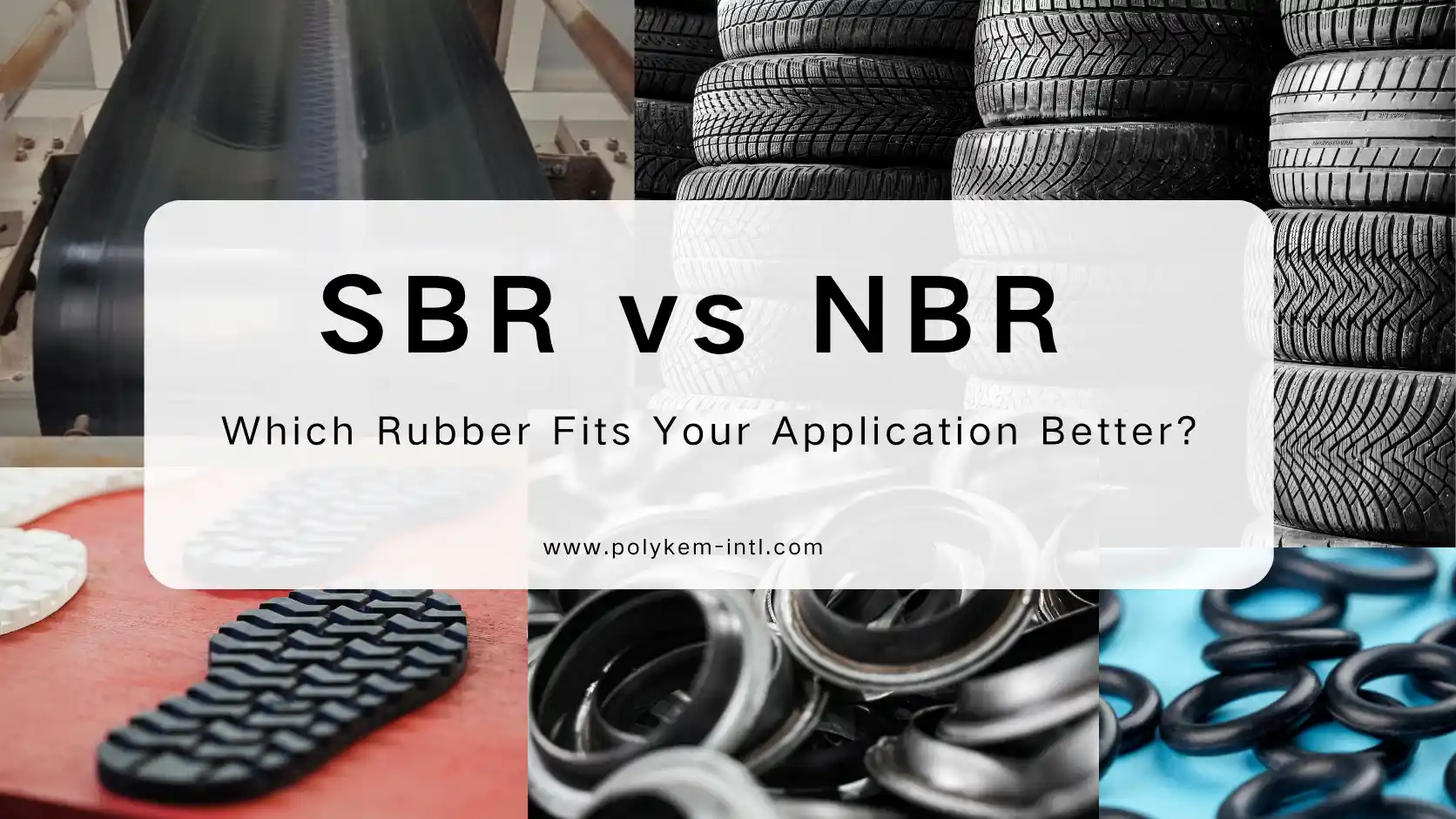
SBR is widely used in applications such as:Tires and tire componentsConveyor beltsFootwear solesRubber sheets and matsGeneral-purpose hosesGaskets and molded rubber products


Its good wear resistance makes SBR suitable for products exposed to repeated friction or mechanical movement. However, standard SBR generally has limited resistance to oils, fuels, ozone and prolonged outdoor weathering.


What Is NBR?


Nitrile Butadiene Rubber (NBR), also known as nitrile rubber, is produced from butadiene and acrylonitrile. The acrylonitrile component gives NBR its characteristic resistance to oils and hydrocarbon-based fluids.


Common NBR applications include:Oil seals and O-ringsFuel and lubricant hosesIndustrial gasketsRubber rollersProtective glovesAutomotive and machinery components


NBR is not one single grade. Its properties can vary according to acrylonitrile content, viscosity and compound design. A higher acrylonitrile content generally improves oil and fuel resistance but may reduce flexibility at low temperatures.

Oil and Fuel Resistance


Resistance to oil is the clearest difference between SBR and NBR.


SBR may swell, soften or lose mechanical strength when exposed to oils and hydrocarbon fuels. It is therefore not normally the first choice for seals, hoses or components that remain in contact with these media.


NBR provides significantly better resistance to many mineral oils, lubricants and fuels. For this reason, it is commonly selected for automotive, hydraulic and industrial sealing applications.


However, “oil-resistant” does not mean resistant to every chemical. The type of oil or fuel, temperature, exposure time and NBR grade must all be considered.


Abrasion and Mechanical Performance


SBR is valued for its abrasion resistance and is widely used in tires, belts, footwear and other products exposed to wear. It can provide dependable mechanical performance at a relatively economical cost.


NBR also offers useful tensile strength and abrasion resistance, but it is generally selected for its fluid resistance rather than as a universal replacement for SBR.


In applications without oil exposure, SBR may provide the more economical balance of wear resistance and physical performance.


Temperature and Outdoor Exposure


Both rubbers have limitations that should be considered during material selection.


NBR can perform well across a useful industrial temperature range, but its low-temperature flexibility depends strongly on its acrylonitrile content and grade design. Higher oil resistance may come with reduced flexibility in cold conditions.


Standard SBR and NBR also have limited resistance to ozone, sunlight and long-term weathering compared with elastomers designed specifically for outdoor exposure. Antioxidants, antiozonants, waxes and protective compound design may help, but outdoor service conditions should be evaluated carefully.


SBR or NBR: Which Should You Choose?


The choice becomes clearer when it is based on the main service requirement:


Application requirement
General direction
Repeated abrasion or wear
SBR
Contact with mineral oil or lubricants
NBR
Fuel hoses and oil seals
NBR
General-purpose rubber products
SBR
Cost-sensitive applications without oil exposure
SBR
Low-temperature flexibility
Compare specific grades
Outdoor ozone and weathering exposure
Additional protection or another elastomer may be required

This table provides a general starting point rather than a final material recommendation. Rubber performance also depends on fillers, plasticizers, curing systems, antioxidants and other ingredients in the finished compound.


Common Material Selection Mistakes


1. Selecting Based on Hardness Alone

Hardness is not an inherent distinction between SBR and NBR. Fillers, plasticizers and curing systems can be used to produce different hardness levels in both materials. Therefore, the same hardness does not mean the same oil resistance, abrasion resistance or service life.


2. Assuming NBR Is Always Better Than SBR

NBR offers better oil resistance, but this does not make it the better choice for every application. For general rubber products without oil exposure, SBR can often provide the required abrasion resistance and mechanical performance at a more economical cost.


3. Treating All NBR Grades as Identical

NBR grades can differ in acrylonitrile content and Mooney viscosity. Acrylonitrile content affects oil resistance and low-temperature flexibility, while Mooney viscosity influences mixing and processing behaviour. An existing grade should not be replaced based on the name “NBR” alone.


4. Ignoring the Complete Rubber Compound

The base rubber is only one factor determining final product performance. Fillers, plasticizers, antioxidants and curing systems can also affect hardness, strength, abrasion resistance and ageing behaviour. Any change in rubber type or grade should be confirmed through compound and finished-product testing.


Choosing Rubber Materials with Polykem

SBR and NBR should not be viewed as direct substitutes. SBR is generally suited to cost-effective, wear-resistant rubber products, while NBR is the stronger candidate for components exposed to oils and fuels.


With more than 15 years of experience in rubber exports, Polykem supplies SBR, NBR and other synthetic rubber materials for different industrial applications. Product information, technical documentation and samples are available according to customer requirements.


Please contact us with the required rubber type, grade, application, quantity and destination to discuss product availability and a suitable supply option.


Related News
Leave me a message
X
We use cookies to offer you a better browsing experience, analyze site traffic and personalize content. By using this site, you agree to our use of cookies.Privacy Policy
RejectAccept