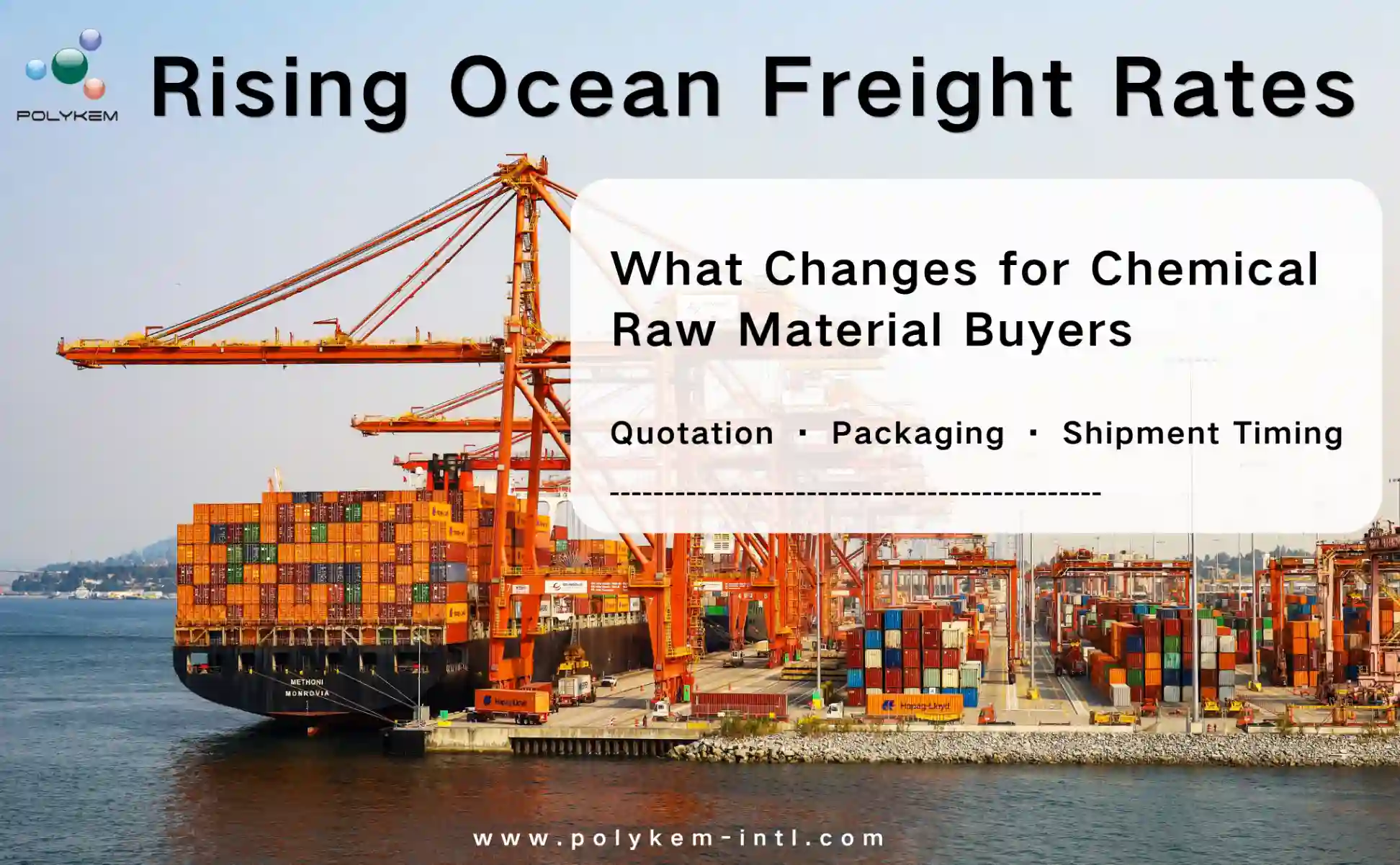
Ocean freight rates have moved upward again ahead of the summer shipping season. According to Drewry’s World Container Index, the composite rate reached USD 4,166 per 40ft container on June 25, 2026, up 5% from the previous week.
For chemical raw material buyers, this kind of movement changes more than the freight line on a quotation sheet. It changes how quickly a quotation needs to be reviewed, how packaging should be compared and how shipment timing affects the final landed cost.
Quotations May Need Faster Decisions
When ocean freight is relatively stable, buyers usually have more time to compare product prices, packaging options and delivery schedules. But when rates move week by week, the purchasing rhythm becomes different.
A CFR or CIF quotation that looks workable today may need to be recalculated a few days later. In some cases, the product price may remain the same, but the total cost changes because the freight rate has moved.
This is why freight volatility can make quotation validity shorter. For buyers working with fixed budgets or customer delivery deadlines, waiting too long may mean missing a workable freight window.
Packaging Differences Become More Visible
Packaging always matters in chemical export orders, but the difference becomes more obvious when freight rates are high.
For liquid chemicals, drums, IBCs, flexitanks and ISO tanks can lead to very different loading quantities. If one packing method uses container space less efficiently, the freight cost per ton may become higher.
For dry products such as Carbon Black or rubber-related materials, bag size, pallet arrangement and loading method also affect container utilization. When freight is low, these differences may look small. When freight rises quickly, they can affect the real landed cost of the order.
Small Orders May Face More Pressure
Freight volatility usually has a stronger impact on small or partial-container orders. If the shipment cannot make full use of container space, the freight cost per unit may become less competitive.
For buyers sourcing several chemical raw materials from China, it may be useful to discuss whether order consolidation is possible. For example, surfactants, rubber processing chemicals or other industrial raw materials may sometimes be planned together, depending on product compatibility, packaging type and shipping requirements.
Consolidation is not suitable for every order, especially when dangerous goods classification or storage requirements are involved. But during freight fluctuations, it is worth checking earlier rather than after the order is already confirmed.
Shipment Timing Can Affect the Final Cost
When rates are changing quickly, shipment timing is not only about whether the goods can be delivered. It can also affect whether the order catches the current freight level or faces a new rate adjustment.
For chemical buyers with upcoming production plans, the practical issue is not only “when can the supplier ship?” It is also “can the product, packaging and documents be ready while the current freight window is still acceptable?”
This is especially important for liquid chemicals, bulk cargo and orders with destination market document requirements.
Polykem Support for Chemical Export Orders
Polykem supplies over 200 chemical products across rubber, surfactant, industrial chemical, and personal care categories, including Nonylphenol Ethoxylate (NPE), Fatty Alcohol Ethoxylate (AEO), Monoethanolamine (MEA), Polypropylene Glycol (PPG), Carbon Black and other products.
During periods of ocean freight volatility, Polykem can help customers discuss product quotations, packaging options, loading information, export documents and shipment arrangements according to the actual order situation.
Buyers with upcoming procurement needs are welcome to contact Polykem early to confirm product availability, packaging formats, loading quantities per container, and shipment scheduling. The earlier the conversation starts, the more options remain open.