News

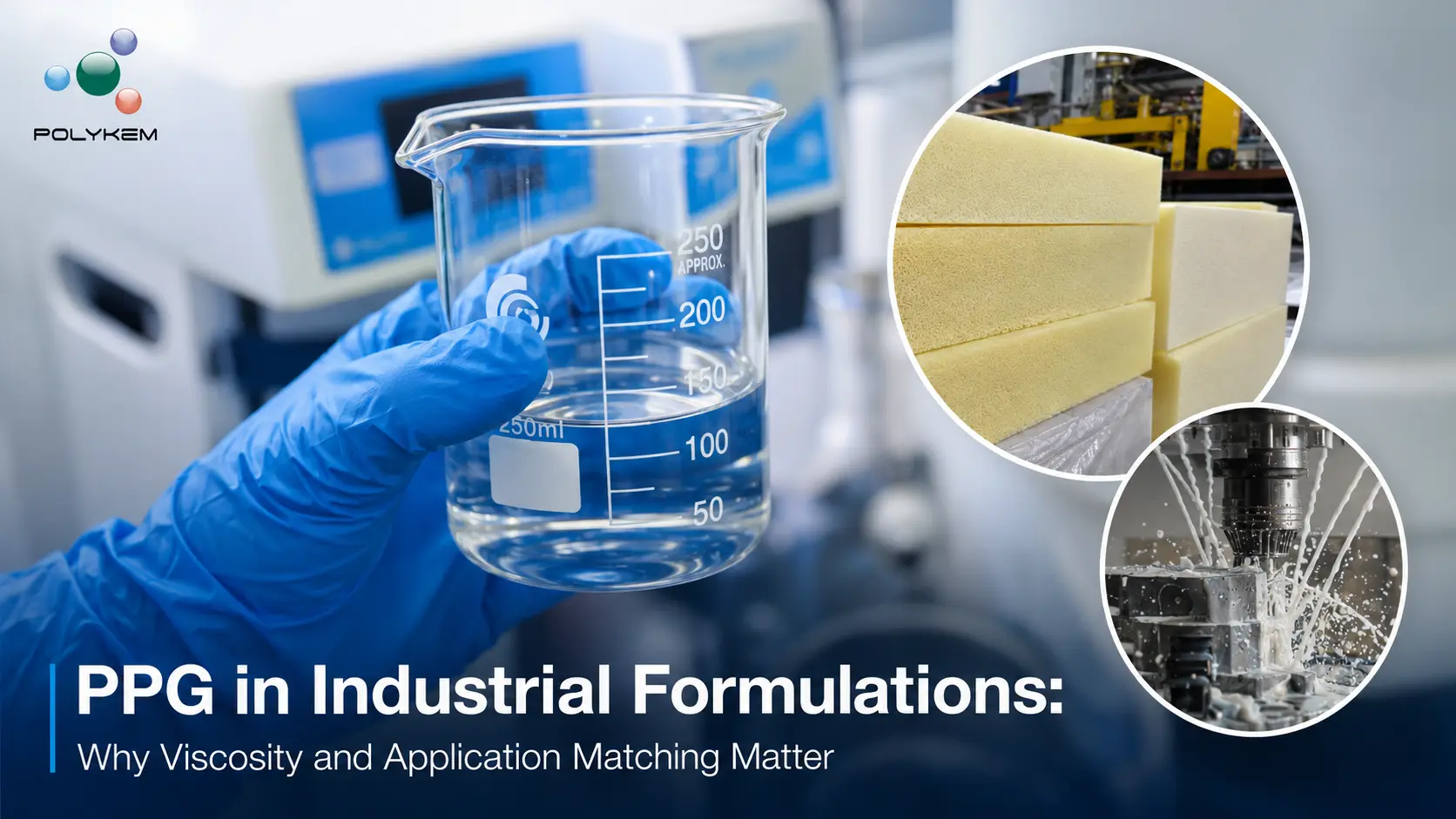
PPG in Industrial Formulations: Why Viscosity and Application Matching Matter

2026-06-29 0 Leave me a message


Polypropylene Glycol, usually called PPG, is not a material that should be selected only by name. In many industrial formulations, the same product category can behave very differently once the molecular weight and viscosity change.


This is why buyers often need to confirm more than “PPG” before placing an order. A grade that works well in one system may not be suitable for another. In real production, PPG selection may affect mixing, flow, compatibility, processing stability and final product performance.


Why Viscosity Comes First


Viscosity is one of the first points customers usually check when sourcing PPG. It can affect how the material is pumped, added, mixed and handled during production.


Lower-viscosity PPG grades are easier to work with in many liquid systems. They may be considered for formulation work, processing aids, lubricant systems, personal care products or pharmaceutical-related applications, depending on the customer’s own requirements.


Higher-viscosity grades are often selected for systems where stronger body, lower volatility or polymer-related performance is needed. These may appear in polyurethane, coatings, sealants, defoamer systems and other industrial formulations.


For buyers, this means that PPG grade selection should not be separated from the actual application. If the viscosity does not match the process, the material may create extra adjustment work during production.


Different Applications Need Different Checks


PPG is used in several industries, but Not every PPG inquiry starts from the same question.


The priorities shift depending on the application. For pharmaceutical and personal care use, buyers usually focus on grade designation — PPG 400 and PPG 1000 come up most often here — along with appearance, odor and whether the documentation meets internal quality or regulatory requirements.


In lubricants and metalworking fluids, the questions tend to be about viscosity range, lubricity and water compatibility. PPG 400 and PPG 500 are commonly discussed in these systems. For polyurethane and polymer applications, molecular weight and hydroxyl value matter more, since they influence reaction behavior — PPG 1000, PPG 2000 and PPG 3000 are typical grades for this direction.


Coatings, sealants and defoamer formulations have a different set of concerns: compatibility with the resin or base system, hydrophobic character and how the PPG affects flow and surface behavior. Higher molecular weight grades such as PPG 3000 and PPG 4000 are often considered here.


So when customers ask about PPG, Polykem usually needs more than a grade name. The application, target viscosity, document requirements, packaging and sample plan all help decide whether the material is suitable for the next step.


What Buyers Should Confirm Before Sourcing PPG


Before purchasing PPG, buyers usually need to check several practical details:

  • Target application
  • Required molecular weight or grade
  • Viscosity rangeHydroxyl value
  • Moisture
  • Appearance
  • Packaging requirement
  • COA, TDS and SDS availability
  • Sample testing needs
  • Shipment and export documents


Once these details are clear, it is easier to move from product inquiry to quotation or sample discussion.


How Polykem Supports PPG Sourcing


For Polykem, PPG sourcing is not just a quotation process. Our team usually starts by checking how the customer plans to use the material, which indicators need to be confirmed, and whether samples or documents should be prepared before bulk order discussion.


Polykem can provide product information, specification communication, sample support, packaging confirmation and export document coordination for PPG orders, covering grades from PPG 400 to PPG 4000. 


We also support related chemical raw materials such as Polyethylene Glycol (PEG), Propylene Glycol, surfactants, solvents and other formulation materials. Visit our product page or contact us for full specifications.


Email: dotachem@polykem.cn

Tel: +86 13621217925


Related News
Leave me a message
X
We use cookies to offer you a better browsing experience, analyze site traffic and personalize content. By using this site, you agree to our use of cookies.Privacy Policy
RejectAccept