Choosing the right HNBR Rubber grade is not only about selecting a material name. For many buyers, the real question is whether the final rubber part can keep stable performance under heat, oil, fuel, pressure, outdoor exposure, or long-term dynamic stress.
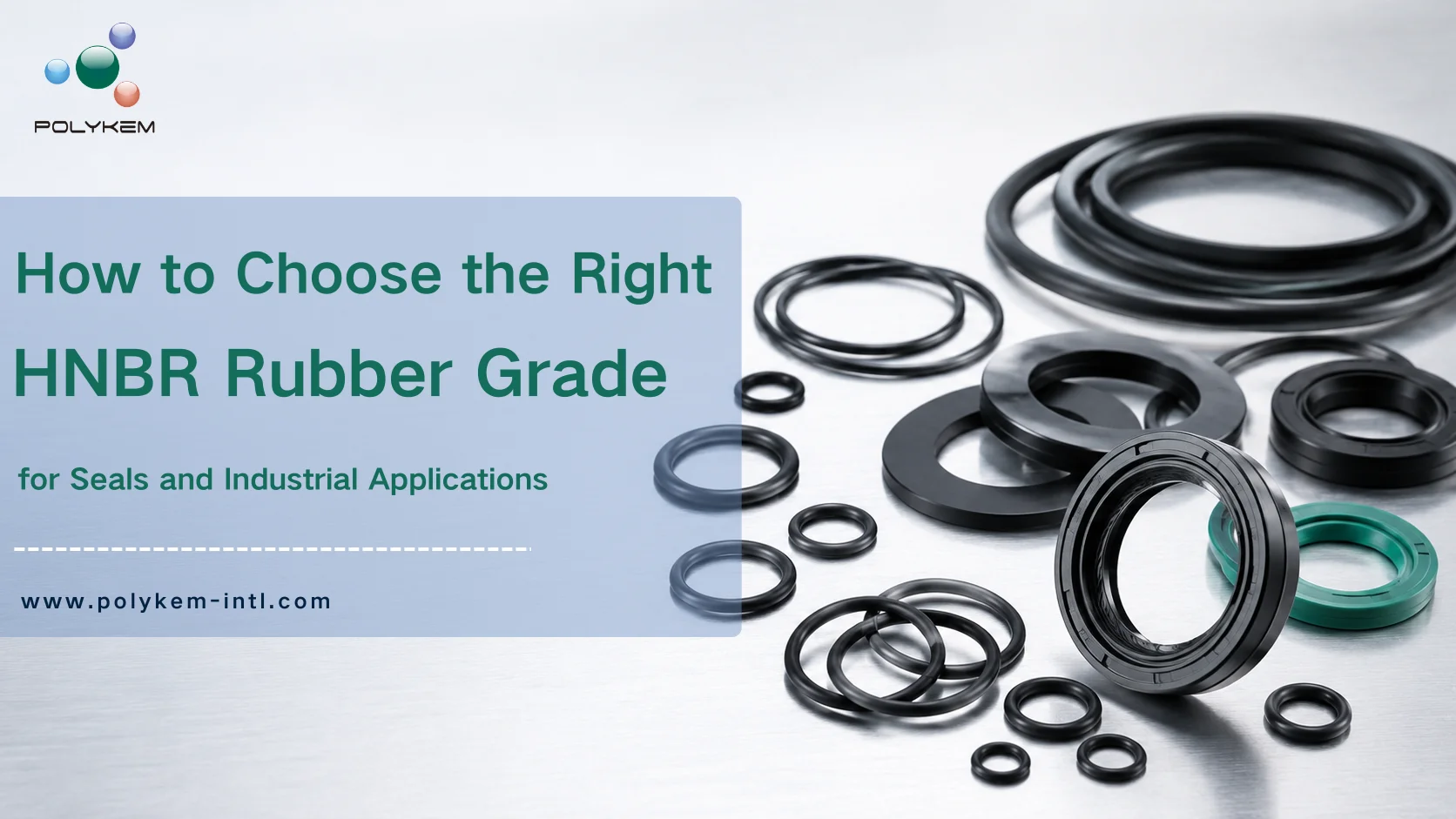
HNBR, also known as Hydrogenated Nitrile Butadiene Rubber, is commonly used in seals, O-rings, gaskets, hoses, belts, oilfield parts, automotive components, and industrial molded rubber products. Since different applications may require different grade properties, buyers need to check several practical factors before placing an order.
With experience in rubber materials and international sourcing communication, Polykem understands that many buyers are not only looking for an HNBR Hydrogenated Nitrile Rubber supplier, but also need practical support before confirming a grade. Instead of selecting HNBR only by product name or price, Polykem recommends checking the final application, processing method, working environment, and cost target together. This article shares several key points that buyers can review before sourcing HNBR rubber from China.
1. Start with the Final Application
Before comparing HNBR grades, buyers should first confirm where the final rubber part will be used. A sealing ring used in an automotive fuel system may not need the same grade as a rubber component used in oilfield equipment or industrial machinery.
HNBR is often selected for rubber parts such as O-rings, oil seals, gaskets, fuel system components, industrial hoses, rubber belts, hydraulic system parts, drilling equipment parts, and molded rubber products.
The more specific the application is, the easier it is to narrow down the grade. For example, buyers may need to confirm whether the part will face repeated compression, continuous movement, outdoor aging, fuel contact, or high-temperature working conditions. These details are more useful than only asking for “HNBR rubber” without application information.
Polykem usually suggests buyers describe the final part as clearly as possible, such as whether it is used for sealing, fuel contact, outdoor exposure, or dynamic movement. This information helps avoid choosing a grade that looks suitable on paper but may not match the real working conditions.
2. Check the Working Temperature
Working temperature is one of the first points to check when choosing an HNBR rubber grade. HNBR is often selected because it offers better heat-aging resistance than standard NBR. However, the actual temperature performance still depends on the grade, compound formulation, curing system, and service environment.
Buyers should clarify the normal working temperature, short-term peak temperature, and whether the rubber part works under continuous heat. It is also important to check whether heat is combined with oil, fuel, pressure, or movement.
In real sourcing communication, temperature information is more useful when it is reviewed together with oil contact, fuel exposure, pressure, or movement.
In many cases, the challenge is not only high temperature itself, but the combination of heat and oil exposure. If the rubber part needs to maintain sealing performance for a long time under these conditions, HNBR may be a material worth evaluating.
3. Confirm Oil, Fuel and Fluid Contact
HNBR Hydrogenated Nitrile Rubber is commonly used in applications that require resistance to oils, fuels, hydraulic fluids, and other industrial fluids. When selecting a grade, buyers should confirm what type of medium the rubber part will contact and how severe the contact condition is.
For example, a part may be exposed to mineral oil, engine oil, hydraulic oil, fuel, or other fluids. The contact may be continuous or occasional, and the rubber may also need to work under pressure, compression, or repeated movement.
A material that performs well in one oil or fuel environment may not be the best choice for another. When discussing grades with Polykem, buyers can share the actual fluid type, contact time, working temperature, and pressure conditions before confirming the material. This allows both sides to discuss the grade more accurately instead of making decisions only from a general product name.
4. Review ACN Content, Mooney Viscosity and Hydrogenation Level
For HNBR grade selection, buyers usually need to pay attention to several material indicators, especially ACN content, Mooney viscosity, and hydrogenation level.
ACN content affects oil resistance, flexibility, and low-temperature performance. A higher ACN level usually helps improve oil resistance, while a lower ACN level may be more suitable when flexibility or low-temperature performance is more important.
Mooney viscosity is related to processing behavior. It can affect mixing, molding, extrusion, and handling during rubber compound production.
Hydrogenation level is connected with heat resistance, ozone resistance, oxidation resistance, and long-term aging performance. These indicators should not be checked separately. They need to be considered together with the final application, processing method, and target performance of the finished rubber part.
If buyers are not familiar with these indicators, Polykem can help review the basic requirements and explain which points may be more important for the intended application.
5. Consider Processing and Curing Requirements
A suitable HNBR grade should match not only the final application, but also the customer’s production process. Different grades may behave differently during mixing, molding, extrusion, or other processing steps.
For seals, O-rings, belts, and molded rubber parts, buyers may need to consider the target hardness, compression set requirements, dynamic performance, curing system, and processing conditions. If the grade is not compatible with the production process, it may create processing difficulty even if the basic material properties look suitable.
A more practical material discussion usually starts from both the production process and the final use environment, rather than from the grade name alone. This can reduce the risk of choosing a grade that is difficult to process or not suitable for the finished part.
6. Do Not Select HNBR Only by Price
Price is an important part of procurement, but HNBR grade selection should not be based only on the lowest offer. A lower-cost option may not be suitable if the final rubber part needs longer service life, better aging resistance, or stronger sealing performance under demanding conditions.
For some applications where FKM materials are currently used but cost control is important, HNBR may be evaluated as a more cost-effective option. However, the final choice should still depend on working temperature, oil or fuel contact, chemical exposure, pressure, and expected service life.
In suitable working conditions, HNBR can provide a practical balance of oil resistance, heat-aging performance, mechanical strength, and material cost. Polykem can help buyers compare material options from both performance and procurement perspectives, so the final choice is not based on price alone.
7. Confirm Samples and Documents Before Bulk Orders
Before placing a bulk order, buyers should not only compare the HNBR grade name and price. Sample testing, document review, packaging confirmation, and shipment timing are also important parts of the procurement process.
For applications such as seals, O-rings, automotive rubber parts, oilfield components, or industrial molded products, small differences in grade, processing behavior, or storage conditions may affect the final result. This is why buyers are often advised to check samples and confirm basic technical documents before moving to larger quantities.
Clear communication at this stage can reduce the risk of material mismatch, production delay, or repeated grade changes. Polykem recommends confirming samples, basic documents, packaging details, and delivery schedule before bulk orders. This step is especially useful for buyers who need repeat orders or long-term supply stability.
How Polykem Supports HNBR Grade Selection
Polykem does not only provide HNBR Hydrogenated Nitrile Rubber as a material. We also help buyers communicate grade requirements before purchase, especially when the application involves sealing, oil contact, heat aging, outdoor exposure, or dynamic stress.
Customers can share the application, target quantity, destination, packaging preference, and technical requirements with Polykem. Based on this information, our team can discuss suitable options, arrange samples, prepare documents, and provide quotation and shipment support.
If you are sourcing HNBR rubber from China, Polykem can respond within one working day and support further communication according to your order requirements.
Related Rubber Materials from Polykem
Related rubber materials from Polykem include Styrene Butadiene Rubber (SBR), Nitrile Butadiene Rubber (NBR), Styrene Butadiene Rubber Latex (SBR Latex), and Liquid Styrene Butadiene Rubber (Liquid SBR), polybutadiene rubber, NBR/PVC, Styrene Ethylene Butylene Styrene.
Conclusion
Choosing the right HNBR rubber grade depends on the final application, working temperature, fluid contact, processing method, and performance expectations. Buyers should not only compare product names or prices, but also confirm whether the material can match the actual service conditions of the finished rubber part.
If you are looking for HNBR rubber for seals, O-rings, automotive components, oilfield parts, or industrial rubber products, Polykem can support you with grade discussion, samples, documents, packaging, and export delivery, contact us today!